Category: News

  • Indian Green Card holder in US to be deported as father-in-law was earlier a Hamas minister

    Indian Green Card holder in US to be deported as father-in-law was earlier a Hamas minister

    [ad_1]


    Indian academic Badar Khan Suri, a Green Card holder and postdoctoral fellow at Georgetown University, is set to be deported after being detained by U.S. Department of Homeland Security (DHS) agents at his home in Arlington, Virginia. His lawyer alleges that Suri is being targeted because of his Palestinian spouse, while officials claim he has links to a designated terrorist organization.

    Arrest and Deportation Orders

    Masked DHS agents reportedly informed Suri that his visa had been revoked before taking him into custody. Tricia McLaughlin, Assistant Secretary at DHS, stated, “Suri was a foreign exchange student at Georgetown University actively spreading Hamas propaganda and promoting antisemitism on social media.”

    According to McLaughlin, Suri has “close connections to a known or suspected terrorist, who is a senior advisor to Hamas.” This likely refers to his father-in-law, Ahamed Yousef, who previously served as deputy foreign minister in the Hamas government and later led the House of Wisdom Institute in Gaza.

    The Secretary of State determined on March 15, 2025, that Suri’s activities made him deportable under INA section 237(a)(4)(C)(i), which applies to foreign nationals engaged in activities that could be deemed a security threat.

    Lawyer Alleges Bias Over Palestinian Spouse

    Suri’s legal representative, Hassan Ahmad, argues that his client is being unfairly targeted, “He is being punished because of the Palestinian heritage of his wife, and because the government suspects that he and his wife oppose U.S. foreign policy toward Israel,” he told Politico.

    Suri met his wife, Maphaz Ahmad Yousef, in 2011 while assisting an international aid convoy to Gaza. She was working as a translator with a humanitarian group. The couple married in January 2014 in Delhi after political instability in Egypt prevented them from holding the ceremony in Gaza.

    Links to Pro-Palestinian Movements

    Suri, who previously studied at Jamia Millia Islamia in Delhi, was teaching “Majoritarianism and Minority Rights in South Asia” at Georgetown University. His arrest follows the self-deportation of Ranjani Srinivasan, an Indian student at Columbia University, who left for Canada after DHS linked her to pro-Palestinian campus activities.

    DHS has been cracking down on individuals suspected of spreading Hamas propaganda under a broader effort by the Trump administration to curb radical activities on U.S. campuses.

    [ad_2]

    Source link

  • From Ancient Egypt to Today: The History of Mother’s Day in the Arab World

    From Ancient Egypt to Today: The History of Mother’s Day in the Arab World

    [ad_1]

    Every year on March 21, families across the Arab world celebrate Mother’s Day with flowers, gifts, and heartfelt gatherings. It’s a day dedicated to honoring the sacrifices and love of mothers. But why this date? 

    Unlike Western Mother’s Day, which varies by country, March 21 has a special significance in the Arab world. It has deep historical roots and a story tied to one journalist’s mission to give mothers the recognition they deserve.

    The Story Starts With a Journalist and a Mom With a Broken Heart

    In the 1950s, Mustafa Amin, one of the founders of Akhbar Al-Youm newspaper and a well-known Egyptian journalist, championed the idea of a national Mother’s Day. 

    The inspiration came from a heartbreaking encounter. A woman visited his office and shared her story—she had sacrificed everything to raise her children after becoming a widow. Once they grew up and started their own lives, they abandoned her. 

    Her pain struck a chord with Amin, and he wrote about it in his column “Fikra”, arguing that mothers should have a dedicated day of appreciation. Public support grew, and in 1956, Egypt officially recognized March 21 as Mother’s Day. The tradition quickly spread across the Arab world, becoming a cherished annual celebration.

    Why March 21st? A Symbol of Renewal

    The choice of March 21 wasn’t random. It marks the first day of spring, a season of renewal and growth. Just as spring represents new beginnings, mothers symbolize nurturing, care, and the cycle of life. This connection between nature and motherhood made the date the perfect tribute, blending history, symbolism, and modern appreciation.

    There Was a Brief Attempt to Replace Mother’s Day

    Despite its popularity, Mother’s Day faced an unexpected challenge. After Amin was accused of espionage in the 1960s, the Egyptian government attempted to rename the holiday “Family Day.” 

    Officials wanted to distance the celebration from his legacy, but Egyptian mothers refused to accept the change. Letters poured in from across the country, demanding the original name be reinstated. Their voices were heard, and Mother’s Day was restored, proving just how powerful the influence of mothers could be.

    Ancient Egyptians Honored Mothers Long Before This Holiday Existed

    While Arab Mother’s Day was officially established in the 20th century, the tradition of honoring mothers isn’t new. Ancient Egyptians revered motherhood, as seen in temple carvings and statues depicting maternal figures. 

    The goddess Isis, known as the ultimate mother, was worshiped for her nurturing and protective qualities. Annual ceremonies celebrated her, with flower-filled boats drifting along the Nile to symbolize renewal and life. March, marking the arrival of spring, became the perfect time to honor mothers as givers of life.

    A Special Day with Deep Roots

    Mother’s Day in the Arab world isn’t just a commercial holiday; it’s a tribute to history, a symbol of gratitude, and a reminder of the sacrifices mothers make. Whether inspired by ancient traditions, a journalist’s mission, or a mother’s unwavering love, the day carries deep meaning. So, how will you celebrate the mothers in your life today?

    WE ALSO SAID: Don’t Miss…Ramadan TV Moms Through the Years—Which One Are You?


    [ad_2]

    Source link

  • Mum Filming Adorable Birthday Interviews With Children Each Year

    Mum Filming Adorable Birthday Interviews With Children Each Year

    [ad_1]

    One of my favourite pastimes as a child was watch old VHS tapes back of my time as a toddler.

    It was fascinating and I remember being captivated by my younger self in the clips – the one of my ice cream blowing off its cone on Blackpool beach had me in bits every time.

    So when I came across Hope Chambers’ video interview with her three-year-old son, I stopped – and I smiled.

    The 32-year-old, who’s based in Amsterdam, has made it her mission to film a birthday interview with her children each year as they grow up.

    “I’m one of those people who is painfully nostalgic so I love to document life so I can look back on memories,” the mum-of-two told HuffPost UK.

    “I thought of this idea before I even had kids because it was something I wish I had of my own life to look back on!”

    The brand marketing consultant has two children and recently shared a video of her eldest son Nico on his third birthday.

    “Sometimes I can do anything that they can set their minds to,” announced the three-year-old in the heart-melting clip. “That’s how the world works!”

    Hope said she’s always been keen to document the small moments in her son’s life. “I didn’t want to forget the sound of his voice or the quirky little expressions he had,” she admitted.

    So, marking the passing of his childhood with a birthday interview each year is a way for her to look back on these moments with joy and reflection, while also being a very sweet way for Nico to see himself and where he came from.

    “I envision giving him these videos on his 18th birthday and sobbing my eyes out as we watch it together,” the mum added.

    If you want to try this for yourself, Hope has shared some of the questions she asks (although she notes these will evolve as her children age):

    • What’s your name and how old are you?
    • Where do you live?
    • What do you do for fun?
    • What are you really good at?
    • Tell me about your friends and who you like to hang out with?
    • Tell me about your family.
    • What do you want to be when you grow up?

    Responding to that last question, Nico declares: “I want to be a vampire when I wake up!”

    Hope said the annual birthday interviews are important to her, because “I want my children going into adulthood with a strong awareness of who they’ve been since a young age”.

    “Even at three years old, I can see so much about who my son is, and I want him to be able to see himself in that light as well,” she said.

    “I think you’re able to give yourself a lot more love and self-compassion if you’re able to witness your childhood self.”

    She might just have a point.


    [ad_2]

    Source link

  • Sia’s Divorce Filing Seeks Custody of Her Third Baby — Report

    Sia’s Divorce Filing Seeks Custody of Her Third Baby — Report

    [ad_1]

    Sia recently filed for divorce from her estranged husband, Daniel Bernad, with documents revealing a looming custody battle after they privately welcomed a child 11 months ago. The singer, whose real name is Sia Furler, filed to divorce him on Tuesday after two years of marriage. PEOPLE obtained the filing papers, listing the same day as the separation date and seeking legal and physical custody of her third child — first with Bernand — named Somersault Wonder Bernad. She previously adopted two teenage boys in 2019.

    After privately welcoming a baby with her estranged husband, Daniel Bernad, Sia is looking at legal and physical custody of the child in divorce documents. The paper focused on the legal custody of the duo’s first child, Somersault Wonder Bernad, whom they welcomed on March 27, 2024, reported PEOPLE. The filings also revealed that the musician is agreeable to visitation rights for Bernad and determining custody time together. Before Somersault, she had adopted two teenage boys in 2019 just as they were about to turn 18 and leave foster care.

    The “Cheap Thrills” hitmaker and her second husband, Bernad, tied the knot in May 2023 in an intimate ceremony and were together for nearly two years. The outlet obtained their divorce documents, discussing details about their 11-month-old baby and the impending custody battle. In addition, Sia cited irreconcilable differences in her filing and requested the court to deny her soon-to-be ex-husband spousal support.

    Reports of Sia’s divorce and potential custody battle surfaced years after she underwent in vitro fertilization treatments with her first ex-husband, Erik Anders Lang. She and Lang, a filmmaker, had been together for three years, from 2014 to 2017, and two years later, she adopted her two sons. Then, in 2020, the Grammy winner disclosed to In Style that she had always “wanted to be a mom my whole entire life” and opened up about her motherhood journey since adopting the boys.

    [ad_2]

    Source link

  • Your browser is not supported

    [ad_1]

    Your browser is not supported | lubbockonline.com
    logo

    lubbockonline.com wants to ensure the best experience for all of our readers, so we built our site to take advantage of the latest technology, making it faster and easier to use.

    Unfortunately, your browser is not supported. Please download one of these browsers for the best experience on lubbockonline.com

    [ad_2]

    Source link

  • Inside Hungary’s radical plan to boost its ailing birth rate with a VERY appealing benefit for stay-at-home mothers – despite fierce opposition. But should Britain follow suit? Special report by SUE REID

    Inside Hungary’s radical plan to boost its ailing birth rate with a VERY appealing benefit for stay-at-home mothers – despite fierce opposition. But should Britain follow suit? Special report by SUE REID

    [ad_1]

    The idyllic scene of a stay-at-home mother cuddling her young sons, Vazul, Magor and Matyas, in front of a wood-burning stove in their thatched cottage, would delight Hungary‘s Prime Minister Viktor Orban.

    We found the Dani family with three boys living contentedly and without money worries next to a forest near the capital Budapest.

    Their happy situation is mainly thanks to an audacious pioneering scheme in Hungary that has been designed to stop the population falling by boosting birthrates: the government has scrapped women’s personal income tax if they have more babies.

    ‘We are announcing a lifelong tax exemption for mothers of two, three or more children,’ Mr Orban proclaimed last month. ‘2025 is the year of the breakthrough. There is nothing like this in the whole world! We will be a tax haven for millions of women who choose to make their family a career.’

    The ‘lifelong’ aspect of this outstanding policy means even if the mothers go back to work after having children, they will never have to pay tax.

    It is the latest raft of handouts available to women to increase birthrates. There is also a host of tax exemptions, grants and cheap loans. Hungary’s move is being watched across the globe.

    We found the Dani family – mother Ibolya and sons Vazul, Magor and Matyus – living contentedly and without money worries next to a forest near the capital Budapest

    The country’s population fell by nearly 10 per cent in 50 years to its current level of 9.9million. But the birth crisis here is far from unique – fewer children are being born globally, particularly in the richer Western nations.

    According to a ground-breaking report in the Lancet medical journal last year, that means in the ‘near future we face a staggering social change’ and a ‘reshaping of the world in which we live in today’. Yet no country has so far discovered a way to solve this so-called ‘baby gap’.

    The facts are simple. To keep a country’s population stable, every woman must have 2.1 babies. This is called the fertility replacement rate, and anything less means there would not be enough fit and able humans to work, create wealth, pay personal taxes and support the elderly to keep a society functioning.

    With falling birthrates, each generation will be smaller than the one before it. And no nation in history that has faced a collapsing population has ever turned the situation around.

    By the end of the century, said the Lancet, there will only be six countries in the world – Samoa, Somalia, Tonga, Niger, Chad and Tajikistan – where the 2.1 replacement rate will be sustained.

    In the UK, total birthrate is expected to fall from 1.49 in 2021 to 1.3 in 2100. The number of pupils in state schools is expected to drop by 50,000 in the next three years. Already some primary schools in London have been forced to close or merge because there are simply not enough children being born to fill the desks.

    Even in the traditionally baby-making Catholic nations of Europe, it is the same sorry story.

    Italian newspaper La Stampa has said ‘for every child under six years old, there are already five elderly people,’ and pointing out that this is unsustainable because ‘three workers [are needed to] support every pensioner’.

    Hungarian PM Viktor Orban encouraging bigger families on his 2023 Christmas card

    Hungarian PM Viktor Orban encouraging bigger families on his 2023 Christmas card

    The paper added a chilling prediction: Italy’s worker pensioner ratio will, in a matter of years, fall to 1.1. At which point the welfare state ‘will collapse’ because not enough people will have been born to sustain it.

    Hungary’s birthrate was at a record low of 1.25 in 2010 when Mr Orban and his populist Fidesz party came to power.

    He introduced initial policies of cash handouts, tax incentives, interest-free loans, subsidised nursery places and even free IVF treatment to encourage motherhood. Maternity leave was also extended to encourage women to stay at home while fathers went out to work (the men get just ten days off when their child is born).

    At first the results looked startling. By 2021, the birthrate was up to 1.61. But the uptick dropped back to 1.5 last year.

    ‘We need more Hungarian children,’ Mr Orban repeatedly declares. He released a ‘Merry Christmas’ card in 2023 to the nation showing him cradling a baby and surrounded by the newborn’s five adoring siblings.

    So can his plan, laced with persuasive propaganda and lures, really crack the birthrate dilemma?

    The Mail went to Hungary to talk to some women – including Ibolya at her cottage with her sons, aged ten, nine and four.

    Seated in her living room, she told us: ‘After my second son was born, I began thinking of a third. We did the sums and couldn’t afford it. Then our dream came true because of the government’s financial help. It meant I wouldn’t have to work again.

    We cross the road to a beach on the bank of the Danube to speak to Dora Nagy, 36, who has two-year-old identical twin girls

    We cross the road to a beach on the bank of the Danube to speak to Dora Nagy, 36, who has two-year-old identical twin girls

    I could be a full-time mother, which is what I wanted.’

    Ibolya, 33, is a talented musician who was born in Romania and moved to Budapest as an opera student in her early 20s. Her husband, ten years older, is a low-paid chef at a country club.

    She told us: ‘The family is the cement of society. I came home from school as a child and found my mother always there.

    ‘She was the central point of my life. I want it to be the same for my boys.

    ‘And most importantly, thanks to the government, we don’t have to worry about money. We have already received some extra state benefits and a tax-free grant of £25,000 for having our family.

    ‘Now I expect I will be rewarded more by Mr Orban.

    ‘The tax-free grant meant we were able to buy a new car, and we bought a house.

    ‘The state assistance means we can afford music lessons for our two eldest boys, who are talented at the cello and violin.

    ‘They have a real chance of success in life.’

    Ibolya loves being a mother. But not all women are prepared to take state money to be baby makers. In a playground at Veroce village, on the banks of the Danube an hour’s drive from Budapest, we met Boglarka Gaspardy-Boros, 28, who worked as a dental assistant before marriage beckoned. She has three children, aged five, two and nine months.

    She said many Hungarian women of her age don’t want children, even though it could mean a lifelong exemption from tax.

    ‘They want their careers, their lifestyle to stay the same. I am one of the few who have started a family.’

    Then she adds: ‘But it is for the family to decide on how many they have – not the state.

    ‘What the state is offering is not enough to make me have another baby. My husband already does three jobs and a fourth child would be too expensive.’

    We then cross the road to a beach on the bank of the Danube to speak to Dora Nagy, 36, whose two-year-old identical twin girls in pink are playing on a climbing frame. Her eldest girl, aged four, is at school in the next village along the river where they live.

    She has lived in London, working at a restaurant where she met her Spanish husband.

    ‘I went there to learn English, but I found no one spoke the language in the shops or streets – everyone was foreign,’ she said.

    ‘The price of a flat was expensive, and when Covid struck, in 2020, I decided we should return to Hungary.

    ‘I was already pregnant with my first girl and I didn’t really think about state help for being a mother.’

    However, she was offered work in a friend’s shop back in Hungary, which meant she had an official employment contract.

    ‘That allowed me to get an interest-free loan from the government because I was expecting a baby, formally working and paying tax. We were able to get a flat and do it up when the twins came along.

    ‘I won’t rely on the state long-term, and wouldn’t try for more children because of the Orban money on offer. I am retraining to be a money exchange trader so I can be independent and earn my own income for my family.’

    But what of concerns about women’s rights?

    Dr Fanni Csernus, Amnesty International’s gender studies expert in Hungary, recently sounded a warning: ‘The government here is insisting a woman’s primary duty is to give birth and raise children. It is forcing one section of society into a situation of constant dependency, which is very problematic.

    ‘We are at a point where a woman’s very existence and financial security depends on how many children she has.’

    They are sentiments which Professor Eva Fodor, a Hungarian social scientist and gender studies expert, would likely applaud. Like many Left-leaning academics, she opposes the birth-boost plan.

    At the Budapest campus of the Central European University of Vienna, Professor Fodor said the policy is only encouraging ethnic-Hungarian married mothers to have children – ignoring single parents, those unmarried and gay couples as well as those at the bottom of the social hierarchy, such as impoverished Roma families – of which Hungary has many.

    As for a birth gap reversal, she says: ‘No single policy has ever changed a falling population.

    ‘My students, in their early 20s, say they don’t want children. It’s not trendy. They want to enjoy their own lives.

    ‘I don’t call the birthrate decline a problem. What’s wrong with a falling population? People could migrate here to increase numbers, if that is issue.’

    Echoing her views, the Lancet report controversially stated an ‘obvious solution’ to the birth gap is letting people from countries with a large young population to migrate to others – such as Hungary or Britain – which do not.

    Natalie Bhattacharjee, one of the authors, predicted: ‘Reliance on open immigration will become necessary to sustain economic growth.’

    This has, of course, alarmed Right-wing political leaders in an increasingly populist Europe and America. Many have fought against lax borders while claiming, like Mr Orban, that more births in traditional families are the solution to the baby gap.

    Into the heated Left vs Right fracas has stepped the Tesla billionaire Elon Musk, owner of X and the father of at least 13 children by various mothers.

    In a social media conversation with Holland’s populist leader Geert Wilders, the Dutch politician warned that his country risked losing Western values thanks to mass, uncontrolled immigration. ‘Agreed,’ replied Musk, currently Donald Trump’s unofficial right-hand man. ‘If your birthrate in Holland stays as low as it is, your nation will die by its own hand.’

    Only last week, Musk warned of the ‘catastrophic population collapse’. He posted a picture holding a sign saying ‘Make More Babies’ as one of his followers on X posted United Nations figures showing the declines in birth rates between 1950 and 2024.

    An anonymous message soon appeared in response to Musk’s alarm. It said specifically of Hungary: ‘Orban’s family policies have a dark secret: they aren’t about raising birthrates but about raising white birthrates. Tax breaks and cheap loans are tailored to exclude poor Roma families, the very community that could help reverse the population decline.’

    When we spoke to Hungarian Roma families, they complained about missing out on the baby boost benefits. Mr Orban’s incentives to make women into mothers are tied to strict regulations concerning parents’ previous employment and making regular tax returns – effectively ruling out the Roma, the newly arrived immigrants and others working in the economy.

    An hour’s drive away from the Danube, we visited a Roma village called Acsa with 200 residents. It is a place of shabby properties, where fierce-looking dogs barked at visitors and the ground underfoot was mostly mud.

    When we knocked on the door of one house with a sunken, tiled roof, a 27-year-old mother-of-three Nema Georgina said she was aware of the handouts to encourage baby making. ‘But, of course, we haven’t been offered them in our community,’ she said.

    ‘I get £150 a month in universal state benefit given to all mothers. My husband works on the black market. He used to go to a construction site but that went by the wayside. Now he does odd jobs whenever he can.’

    Her mother-in-law owns the dilapidated house, where ten people live, including Nema’s family, some cousins, her sister and all their children. ‘It has no heating,’ she says, apart from its open fireplace. ‘At night it can drop to minus 8 degrees inside. The young ones are often sick, my toddler has the flu. It is hard to nurse a child better when it’s so cold.

    ‘It’s not fair my sister and I are not given the same money that is helping other Hungarian mothers.’

    ‘Will you and your husband have more children,’ I ask. ‘No,’ she says with certainty. ‘The reason is obvious. We have no home of our own and struggle to feed the three kids. The government don’t want Roma to have bigger families. We are not the right sort of people.’

    As Hungary’s radical attempts to increase its birthrate take root, the question is whether Britain – where the baby gap is causing increasing concern – will follow suit.

    A recent survey by London University revealed 31 per cent of Gen Z Britons are not interested in having babies, many of them explaining they ‘find children a nuisance’ and ‘want time for themselves’.

    It is an ominous situation that worries Rupert Lowe, former Reform MP and champion of many on the Right, who said: ‘Having a child is an incredibly difficult decision for young men and women now. The brutal truth is: we need Britons to have more children. We are dying out.’

    [ad_2]

    Source link

  • Netflix’s Adolescence is every parent’s nightmare – but what worries you about raising children in 2025? Join The Independent Debate

    Netflix’s Adolescence is every parent’s nightmare – but what worries you about raising children in 2025? Join The Independent Debate

    [ad_1]

    Netflix’s gripping new drama Adolescence has sparked intense discussion about the unseen dangers shaping young people today.

    Starring Stephen Graham, the series follows the aftermath of a shocking crime committed by a 13-year-old boy, delving into the disturbing realities of online influences, misogyny, and the “manosphere.”

    Graham, who co-wrote the series, warns parents that children are being shaped not just by family and school but by forces beyond their control — forces that are often hidden behind screens.

    The show raises tough questions: How do we protect children when harmful content is just a click away? How do we address the rise of male rage, incel culture, and extremist ideologies subtly infiltrating young minds?

    Now we want to hear from you. What are the biggest threats facing the next generation? And what keeps you up at night when you think about children growing up in today’s world?

    Vote in our poll or share your thoughts in the comments – we’ll feature the most compelling responses and share the results in the coming days.

    All you have to do is sign up and register your details – then you can take part in the discussion. You can also sign up by clicking ‘log in’ on the top right-hand corner of the screen.

    [ad_2]

    Source link

  • Israeli attacks in Gaza kill more than 70, including newborn baby | Israel-Palestine conflict News

    Israeli attacks in Gaza kill more than 70, including newborn baby | Israel-Palestine conflict News

    [ad_1]

    Israel’s renewed bombardment of Gaza is continuing for a third consecutive day, with more than 70 people killed in predawn attacks, including a newborn baby.

    At least 71 people were killed overnight and early on Thursday in southern and northern Gaza, according to health officials in the coastal enclave. Many others were injured in the attacks.

    Palestinian news outlet Quds News Network said at least 20 people were killed in Khan Younis in the south after Israeli forces struck several houses in the area.

    Meanwhile, in northern Gaza, an attack on a family home in the as-Sultan neighbourhood, west of Beit Lahiya, killed at least seven people.

    “The Israeli attacks across the Gaza Strip have intensified, especially at dawn, when at least 11 residential buildings were flattened by the Israeli forces,” said Al Jazeera’s Tareq Abu Azzoum, reporting from central Gaza.

    “We understand that the death toll has sharply increased to 71 Palestinians.”

    A woman mourns near the body of a person killed in an Israeli attack, at the al-Ahli Hospital in Gaza City [Jehad Alshrafi/AP Photo]

    “Among those victims who have been killed today were a newborn baby alongside children and women,” Abu Azzoum said.

    “There has been a clear strategic approach that Israel has been using, which does not pass any sort of warning to civilians before striking the buildings that they are taking refuge in,” he added.

    The latest killings come after Israel shattered the nearly two-month-long ceasefire in Gaza on Tuesday. Since then, Israeli attacks have killed more than 710 Palestinians and injured 900 others, Khalil Al-Daqran, spokesperson for the Gaza Ministry of Health, told Al Jazeera Arabic. About 70 percent of the injured are children and women, he added.

    UN demands answers

    On Wednesday, a United Nations foreign staffer was killed and five other workers were wounded in an Israeli air raid on a UN site in central Gaza.

    The UN humanitarian aid chief, Tom Fletcher, described the attack as “infuriating”.

    He said the strikes targeted a “clearly designated” UN compound in Gaza, and the UN demands “answers” while “we grieve with the family of our colleague”.

    “International law is clear. Civilians – including UN staff and humanitarian workers – must not be targeted. The international community must join us in insisting on a genuine investigation and accountability,” Fletcher said in a statement, without attributing blame for the killing.

    Israel’s resumption of attacks drew widespread condemnation, including from UN Secretary-General Antonio Guterres, who said he was “outraged by the Israeli air strikes in Gaza”.

    As Israeli troops resumed ground operations in Gaza on Wednesday, they also reclaimed control of the Netzarim Corridor, effectively cutting off northern Gaza from the rest of the enclave.

    “The Israeli military’s move to reoccupy the Netzarim Corridor is bringing back bad memories from before the ceasefire,” said Al Jazeera’s Hani Mahmoud, reporting from Gaza City.

    “During the ceasefire, Palestinians could cross it to get back to their homes in the north. But not any more. Now people’s movement is quite limited.

    “Its reoccupation is a reminder that the Israeli military is advancing for a larger-scale operation,” he said, adding that before the truce, Netzarim served as a launching pad for many Israeli military operations and was “a death trap for many Palestinians”.

    The breakdown of the ceasefire has also been met with anger in Israel, where many support the families of captives seeking the return of their loved ones from Gaza.

    Thousands of Israeli protesters massed in Jerusalem on Wednesday, accusing Israeli Prime Minister Benjamin Netanyahu of resuming attacks on Gaza without regard for the safety of the captives still held in the coastal enclave.

    [ad_2]

    Source link

  • Formula 1 | Verstappen’s father accuses McLaren CEO of ‘stirring’

    Formula 1 | Verstappen’s father accuses McLaren CEO of ‘stirring’

    [ad_1]

    Max Verstappen’s father has accused McLaren CEO Zak Brown of trying to “stir sh*t”.

    In a new interview with London’s Telegraph newspaper, Brown admitted that he thinks the quadruple world champion will leave Red Bull at the end of the year.

    “Most likely to Merc,” said the American, referring to Mercedes.

    “There’s been talk of Aston Martin, too, with Adrian Newey joining. If I was betting, I’d bet on Merc.

    “In the last 10 years, they’ve won the championship seven or eight times. They have stability. We know Toto likes him. And I think we all feel HPP is best-equipped on the power unit side heading into the new engine regulations next year,” added Brown.

    On an Instagram post summarising Brown’s comments, Jos Verstappen quipped: “He only is trying to stir sh*t”.

    Brown also revealed recently that he reached out to Verstappen’s management team to “explore the market”, later explaining that he speaks with most drivers as well.

    But it is clear that there is no love lost between Brown and Red Bull – with team boss Christian Horner calling the McLaren CEO a “pr*ck” in the latest edition of Drive To Survive.

    Brown told the Telegraph that the animus is “genuine”.

    “There’s no love lost there. I don’t like how he rolls and no doubt he feels the same about me,” he admitted.

    “But I think it’s good for the sport. You need different characters. You need these rivalries. Some are friendly, sporting rivalries. Some are a bit more vicious. It’s always been like that.”


    [ad_2]

    Source link

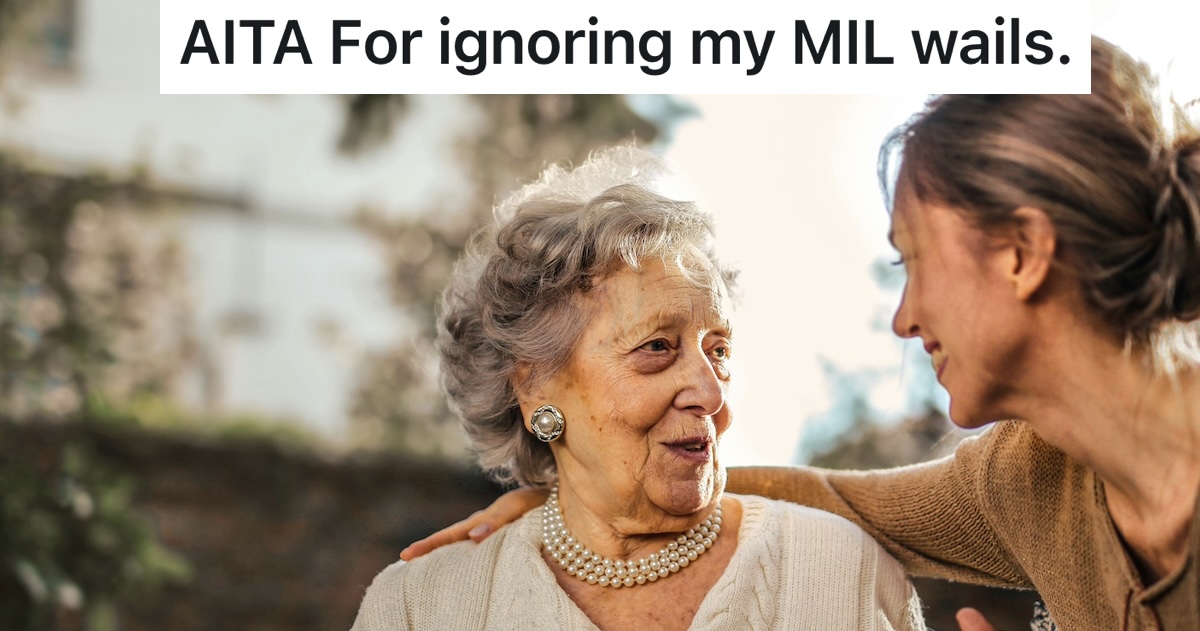
  • Her Elderly Mother-In-Law Moves In After Losing Her Husband, But Her Late-Night Wailing Pushes Her Daughter-In-Law To The Brink » TwistedSifter

    Her Elderly Mother-In-Law Moves In After Losing Her Husband, But Her Late-Night Wailing Pushes Her Daughter-In-Law To The Brink » TwistedSifter

    [ad_1]

    young woman puts her arm around elderly woman

    Pexels/Reddit

    What would you do if your significant other asked if their elderly mother could move in with you?

    Saying yes might seem like the right thing to do, but it’s not always easy, as one woman discovered in today’s story.

    She’s been putting up with her mother-in-law’s quirks for awhile now, but she finally can’t take it any more.

    Now she’s wondering if ignoring her mother-in-law is heartless or the only option.

    Let’s read all the details to decide.

    30 f recently moved into a bigger place with my partner 38m with his elderly mother since her husband passed 2 years ago.

    Shes a very nice old woman, had a stroke in 2010, liked to read and do crossword puzzles, tidy things up around the place, go for walks etc.

    A year after her husband passed, it became apparent she couldnt live alone.

    I was very clear that I will not be a caretaker. I am coming out of my own trauma and grief and its not something Im willing to do.

    It does sound like she’s very nice to her mother-in-law.

    I am VERY empathetic towards her.

    Making sure to get her out, taking her places she enjoys, scheduling her hair appointments, keeping her company so she can feel at least some sort of semblance.

    When I take her out for lunch or coffee everything is fine.

    In public.

    But the mother-in-law is troublesome at home.

    She wont eat.

    She keeps her phone off, doesn’t want to talk to her brother or older son.

    Understandable. My partner started calling me to get into contact with his mother , so I shut that down.

    She doesnt want to learn how to do anything for herself.

    She started moaning and wailing in the early morning and and night.

    There are more problems.

    My partner talked to her about its affecting OUR sleep.

    She stops. She is nice, but she is very much a nightmare patient.

    Making everything difficult for the staff, with her hysterics to needles.

    Wont take vitamins we buy that are easy for her to ingest because “she doesnt like gummies.”

    Empathy has its limits, especially when it starts feeling like a full-time job.

    When hes here, shes fine.

    When Im not working and Im here, she starts moaning and wailing in intervals.

    She communicates just fine. Her speech hasnt been impeded.

    I have my own mental health issues and do not have the space.

    She refuses speaking to a grief counsler.

    I put on my earbuds and ignore it.

    You can’t pour from an empty cup.

    Her older son living in another state feels she is being irrational.

    But of course she is, she’s feeling a lot very late in her life.

    I myself just dont have emotional space to assist with high emotional bursts between working physically demanding job and struggling with my own mental health and grief.

    If she expresses with her words whats going on, I am more than happy to help. I sort of feel bad but sort of not.

    AITA?

    There’s a difference between being supportive and being emotionally drained. But is tuning her out reasonable or just plain cruel?

    Let’s see what Reddit has to say…

    Most people said NTA.

    Screenshot 2025 03 04 at 9.17.55 PM e1741141323729 Her Elderly Mother In Law Moves In After Losing Her Husband, But Her Late Night Wailing Pushes Her Daughter In Law To The BrinkScreenshot 2025 03 04 at 9.17.55 PM e1741141323729 Her Elderly Mother In Law Moves In After Losing Her Husband, But Her Late Night Wailing Pushes Her Daughter In Law To The Brink

    This person said no one is really the jerk here.

    Screenshot 2025 03 04 at 9.18.19 PM e1741141329896 Her Elderly Mother In Law Moves In After Losing Her Husband, But Her Late Night Wailing Pushes Her Daughter In Law To The BrinkScreenshot 2025 03 04 at 9.18.19 PM e1741141329896 Her Elderly Mother In Law Moves In After Losing Her Husband, But Her Late Night Wailing Pushes Her Daughter In Law To The Brink

    And this person leans more toward Hubby being the jerk.

    Screenshot 2025 03 04 at 9.18.28 PM e1741141334425 Her Elderly Mother In Law Moves In After Losing Her Husband, But Her Late Night Wailing Pushes Her Daughter In Law To The BrinkScreenshot 2025 03 04 at 9.18.28 PM e1741141334425 Her Elderly Mother In Law Moves In After Losing Her Husband, But Her Late Night Wailing Pushes Her Daughter In Law To The Brink

    Noise-canceling earbuds: saving sanity or killing compassion?

    If you thought that was an interesting story, check out what happened when a family gave their in-laws a free place to stay in exchange for babysitting, but things changed when they don’t hold up their end of the bargain.

    [ad_2]

    Source link