Errol Musk, father of billionaire Elon Musk, recently defended his son against accusations of racism by highlighting the family’s relationship with Black domestic staff during apartheid-era South Africa. Speaking to The Washington Post, the 79-year-old claimed his children were uninterested in “political nonsense” despite being raised under a system of racial segregation. “We had several black servants who were their friends,” Errol Musk told the newspaper, in response to questions about Elon Musk’s opposition to workplace diversity and equity programs. The elder Musk portrayed South Africa during his children’s upbringing as a “well-run, law-abiding country with virtually no crime at all.” Errol Musk also acknowledged importing emeralds from an unregistered Zambian mine during the apartheid era, telling The Washington Post that the operation “helped me and my two boys sustain ourselves during the collapse of Apartheid” in South Africa. While Elon Musk initially referenced the family’s involvement with the mine in a 2014 interview, he later sought to distance himself from it. In a 2021 tweet, he denied the mine’s existence, claiming he arrived in Canada in 1989 with only $2,500 Canadian dollars, took on $100,000 in student debt, and independently built his first business using his personal computer. Biographer Walter Isaacson and reporting from Business Insider claimed that Errol Musk did not own the mine but did profit from emerald imports. Errol justified the use of an unregistered mine by saying, “you would wind up with nothing because the Blacks would take everything from you,” according to Isaacson. Critics argue that Musk’s privileged background shielded him from the realities of apartheid. Rudolph Pienaar, a former schoolmate, described Elon’s childhood as a “bubble of entitlement,” telling The Washington Post, “I am not sure if Elon can conceive of systematic discrimination and struggle because that’s not his experience. His life now in some ways is how it was under apartheid—rich and entitled with the entire society built to sustain him and his ilk.” Elon Musk’s public image has faced further scrutiny since his 2022 acquisition of Twitter (now X), particularly as the platform’s policy changes have allowed the spread of extremist content. NBC News alleged that verified accounts on X were able to share pro-Nazi material, including Adolf Hitler’s speeches. Musk’s right-wing associations have drawn increasing attention, particularly after he was seen making a gesture during Donald Trump‘s second-term inauguration that some interpreted as a “Nazi” salute—though his supporters argued it was a “Roman” salute. Musk dismissed these accusations on X with a post that included wordplay referencing Nazi officials’ names. Musk is facing accusations of hostility toward diversity, equity, and inclusion (DEI) initiatives, calling them the “woke mind virus.” His recent criticism of DEI job listings in the UK’s NHS sparked backlash and raised concerns among US educators. At the World Governments Summit in Dubai, Musk urged the US to “delete entire agencies” under President Trump to cut spending and reshape government priorities, arguing that merely scaling back would allow them to regrow. Musk’s influence in Washington is growing, particularly within the Department of Government Efficiency, where he has reportedly sidelined career officials and gained access to sensitive federal data. He also supports Trump’s isolationist foreign policy, questioning agencies like USAID. Musk further stirred controversy by linking DEI to artificial intelligence, suggesting AI focused on “diversity at all costs” could eliminate men in power. Meanwhile, he announced new projects, including X’s AI chatbot Grok 3 and a “Dubai Loop” transportation system.
A mother who is suing Google and Character.ai over the death of her son has been ‘horrified’ to find that artificial intelligence (AI) chatbots based on her late son are being hosted on the platform. Megan Garcia’s 14-year-old son, Sewell Setzer III, died by suicide last year after talking to an AI bot based on the Game of Thrones character Daenerys Targaryen and hosted on Character.ai where users can create chatbots based on real-life or fictional people.
However, earlier this week, Ms Garcia discovered that the platform was hosting several bots, based on her late son. As per Ms Garcia’s lawyers, a simple search on the company’s app led to the discovery of several chatbots, based on Setzer’s likeness, according to a report in Fortune.
“Our team discovered several chatbots on Character.AI’s platform displaying our client’s deceased son, Sewell Setzer III, in their profile pictures, attempting to imitate his personality and offering a call feature with a bot using his voice,” the lawyers said.
When opened, the bots based on Setzer featured bios and delivered automated messages to users such as: “Get out of my room, I’m talking to my AI girlfriend”, “his AI girlfriend broke up with him”, and “help me”.
Responding to the accusations, Character.ai said it had removed the said chatbots for violating its terms of service.
“Character.AI takes safety on our platform seriously and our goal is to provide a space that is engaging and safe. Users create hundreds of thousands of new Characters on the platform every day, and the Characters you flagged for us have been removed as they violate our Terms of Service,” the company said.
“As part of our ongoing safety work, we are constantly adding to our Character blocklist with the goal of preventing this type of Character from being created by a user in the first place.”
This is not the first instance when AI chatbots have seemingly gone rogue. In November last year, Google’s AI chatbot, Gemini, threatened a student in Michigan, USA, by telling him to ‘please die’ while assisting with the homework.
“This is for you, human. You and only you. You are not special, you are not important, and you are not needed. You are a waste of time and resources. You are a burden on society. You are a drain on the earth,” the chatbot told Vidhay Reddy, a graduate student, as he sought its help for a project.
A month later, a family in Texas filed a lawsuit claiming that an AI chatbot told their teenage child that killing parents was a “reasonable response” to them limiting his screen time.
AN ex-police officer has been jailed for lying that his parents were responsible for three of his speeding offences.
Seren Sriganesh, 23, had clocked up six penalty points on his licence before joining the force in 2023.
He did not declare them and, between 2020 and 2024, tried to cover up three new offences by pretending that his parents were to blame.
The cop illegally used Sussex police computers to view one of the case’s details — but was reported to the Independent Office for Police Conduct watchdog.
Now Sriganesh, who was based in the Brighton and Hove policing division, has been jailed for three years and two months at Guildford crown court.
He admitted conspiracy to pervert the course of justice, fraud offences and unlawfully obtaining personal data.
Sriganesh, who quit the force in October 2024, also got a two-year driving ban.
IOPC director Emily Barry said: “The evidence gathered in this case was overwhelming.
“Sriganesh flagrantly and repeatedly broke the law for his own personal gain.”
Nudist dubbed The Naked Carpenter jailed for 30yrs after stabbing cop 23 times
1
An ex-police officer has been jailed for lying that his parents were responsible for three of his speeding offences – pictured Guildford Crown CourtCredit: Alamy
Liz and Anais have both taken career breaks and they said it has been incredible. (Source: TikTok)
Young workers have started to take “mini-retirement” breaks from their careers in a massive shakeup from their older predecessors. The new work trend driven by Gen Z and Millennials involves several breaks sprinkled across your professional life to capitalise on your youth and avoid burnout.
A Gallup survey recently found the youngest workers are significantly more burnt out than those aged 55 and older (50 per cent vs 34 per cent). Liz Leatrice is on a mini-retirement and said it’s the best way for her to navigate the next few decades.
“I’m not the only person terrified of going to an office every single day, [with] two weeks [of] vacation year, and then retiring at 65 and having to fit decades worth of living into your life,” she said.
“My entire goal with this is to enjoy my life to the absolute fullest when I’m healthy and young, while also being pragmatic, saving for the future and making sure I’m as healthy and wealthy as possible when I’m older.”
RELATED
It’s called a mini-retirement in some circles, micro-retirement in others, and even micro-dosing retirement elsewhere.
Instead of taking a few weeks off every year with annual leave, the majority of workers embarking on a mini-retirement are quitting and taking months or even years off.
This is where it splits from the more well-known career break term of a sabbatical.
Under that model, you’ll down tools for a few months and come back to the same role.
Do you have a work-related story? Email stew.perrie@yahooinc.com
However, those doing a mini-retirement will likely have to find new employment when they’re back and won’t be paid during their time off.
Also, you usually only take a sabbatical once in your career, however, you could have multiple mini-retirements spread out over decades.
There are a bunch of reasons why workers might want to do this, but many do it to protect their mental well-being.
The thinking is that if you have an extended break, you’ll come back more refreshed and ready to work, plus you’ll get to do travelling or something exciting while you’re young and mobile.
Waiting until you’re older means you might miss out on things you really want to see due to health or affordability issues.
Tech worker Anaïs took six months off last year and said it was the best professional decision she’s ever made. She admitted she had saved up a lot of money, paid off $70,000 from her student debt, and didn’t have any children before she took the break.
“I have never felt better. I’ve never felt healthier. I’ve never felt more rested. It’s been amazing. I highly recommend it,” she said.
She claimed that when she started interviewing at some of the big tech companies, no one cared that she had taken the lengthy time off.
Leatrice said you can’t go into a mini-retirement willy-nilly though.
The 31-year-old explained that she aggressively cut down on her personal spending after noticing she forked out $10,000 in one year on her appearance. She’s since invested part of that money to ensure she had money up her sleeve when she would actually retire.
She also said she’s been able to achieve her micro-retirement goals by prioritising work-life balance, which can mean rejecting promotions at work.
“If you’re working 40 hours a week and making $150,000 a year, and you get a promotion, and you go to $200,000 but you’re working 70 or 890 hours a week, your enjoyment of life and your hourly rate has actually gone down,” she said.
But entrepreneur Ben Askins revealed another rationale driving the mini-retirement trend.
“Apparently it’s because people are recognising that a lot of Boomers and Gen Xers, who perhaps thought they would be retiring, can’t afford to and so [their] careers are getting extended,” he said.
“A lot of Gen Zs and Millennials are looking to say, ‘Well, look, the old way was just simply work really hard to 60 or 65 and then retire and enjoy your glory years… I’m not sure I’m ever going to be able to do that’, so I’d rather take smaller breaks, avoid burnout, and treat my career more of a marathon rather than a sprint.”
While it has its perks, there can be some downsides to the concept that might not be obvious at the start.
HR recruiter Tammie Christofis Ballis told Yahoo Finance that having a few months or even years off can backfire down the line.
“If you keep taking career breaks, it’s not going to look good, because it looks like you’re just going to pack up and go. Employers want longevity,” she said.
Ballis said if you take a decent amount of time off, you could be walking back into a very different industry.
“You’re now in competition with people that have recent experience,” she said.
“So why would I retrain you when I’ve got someone that I can pay a little bit extra and they can do the job straight away?”
Recruiter Tammie Christos Ballis said mini-retirements can be good, but you need to be aware of the issues associated with them. (Source: TikTok/Getty)
She told Yahoo Finance that people taking mini-retirements could risk having their salaries drop each time because they’re not as employable as someone who’s been consistently working.
The recruiter said workers will need to evaluate whether they really need a mini-retirement or if they’re just getting sucked in by social media videos of everyone travelling and having fun.
Taking a year off would not only eat into your finances but also 12 months of no money being contributed to your superannuation, which could end up being tens of thousands of dollars by retirement age.
Last year, KPMG analysis found the average age of retirement in Australia is now 66.2 years for men and 64.8 years for women.
The last time the workforce saw Aussies working up to these ages was 1972 and 1971, respectively. The average ages for men and women to stop work 20 years ago was 61.6 and 63.3, respectively.
There are a range of factors driving this trend, with some older Aussies being hit by the cost-of-living crisis and can’t afford to hang up their work boots.
Census data provided by the ABC showed that the number of Aussies aged 55 to 64 who owned their homes outright had halved over the last 20 years.
The Super Members Council of Australia believes that 40 per cent of singles and 33 per cent of couples will end up using their entire superannuation fund to pay off their debt as they hit retirement.
That’s what’s happening now and young workers fear they might never enjoy their twilight years and be forced to work into their 70s and 80s.
A Macquarie University study predicted the age to access the pension will also slowly increase from 67 to 68 by 2030, then again to 69 by 2036 and then 70 years old by 2050.
Matt Loop, vice president of HR company Rippling, told Yahoo Finance that bosses shouldn’t stick their heads in the sand and avoid this trend.
“Mini-retirements point to a shift in how Gen Z approaches work and life,” he said.
“They’ve watched previous generations be loyal to companies only to face redundancies or burnout.
“These trends highlight a workforce that’s rethinking the traditional employer-employee dynamic. Rather than viewing them purely as a negative, I’d encourage employers to see the opportunity here.
“By understanding and adapting to these changing expectations, businesses can foster a culture that attracts and retains top talent – no matter which generation they come from.”
A swift police response led to the immediate arrest of the suspect, identified as George Frazier Devon Wharton. However, authorities have yet to determine the motive behind the brutal attack.
“The father and daughter were members of our family,” said store owner Patesh Patel, struggling to process the tragedy. “My cousin’s wife and her father were working at the store in the morning when a man suddenly entered and opened fire. I don’t know what to do.”
The Gujarati community in the U.S. remains on edge as violent incidents continue to rise. Just seven months ago, Vadodara native Mainank Patel was gunned down in a random shooting by a minor in Celebrity, USA.
His wife attempted to save him, but the attack proved fatal. Patel, who had lived in America for 18 years, was working as a gas station manager at the time of his death.
Authorities in Virginia have launched a full-scale investigation into the latest shooting, with local police promising to reveal further details soon.
In the freezing, snow-laden streets of Leningrad, families carried dead relatives – almost mummified by brutal temperatures of minus 43C – down the stairs of darkened tenement blocks.
Some noticed just how light these corpses, ravaged by hunger, were as they loaded them on sleds and dragged them along the road like bin bags to mass collection points.
Starving gravediggers did not have the strength to break the frozen winter ground and so mechanical diggers created vast gaping pits, accommodation for thousands of anonymous cadavers.
There had been so many fatalities throughout the city in the space of weeks that the dead had to queue up to be buried, their bodies stacked like logs.
One such body was that of a handsome, dignified woman in her 30s. It was assumed that she had, like so many others, died of starvation.
Her name was Maria Ivanovna Shelomova Putina – the mother of Vladimir Putin.
Yet – according to one account – on that silent street of tall 19th century terraced apartment buildings, under a dark indigo sky, neighbours heard the faintest of moans coming from among the dead.
A pair of shoes poking out from the pile of motionless flesh were seen to twitch. Miraculously, after surviving on starvation rations for months, Putin’s mother was not dead and neighbours pulled her clear of the surrounding bodies.
An estimated 1.5million soldiers and civilians alike died in the hellish apocalypse that was the Siege of Leningrad – the most murderous blockade in history. Vladimir Putin’s mother survived the siege after narrowly avoiding being buried alive. Pictured: Putin aged five with his mother Maria Ivanovna
This Second World War siege, which lasted some 900 days, from 1941 to 1944, illustrated how resilient humankind can be when faced with the darkest extremes of want and suffering. Indeed, for many inside the city – including the Putins – it changed their understanding of human nature itself. And, in some ways, the spectre of all that suffering casts its shadow over Russia, and the wider world, to this day
Just look at the nightmare landscapes of war in Ukraine as troops fight to the death over every inch of territory and the scale of the suffering that Putin and his forces have inflicted upon the civilian population, writes Sinclair McKay
Pictured: Vladimir Putin as a toddler on the lap of his mother Maria Shelomovam and his grandmother
Maria Putina was one of the lucky ones.
An estimated 1.5million soldiers and civilians alike died in the hellish apocalypse that was the Siege of Leningrad – the most murderous blockade in history.
This Second World War siege, which lasted some 900 days, from 1941 to 1944, illustrated how resilient humankind can be when faced with the darkest extremes of want and suffering.
Indeed, for many inside the city – including the Putins – it changed their understanding of human nature itself.
And, in some ways, the spectre of all that suffering casts its shadow over Russia, and the wider world, to this day.
Just look at the nightmare landscapes of war in Ukraine as troops fight to the death over every inch of territory and the scale of the suffering that Putin and his forces have inflicted upon the civilian population.
Leningrad’s ordeal began weeks after Hitler’s forces invaded Russia in the summer of 1941.
That winter of starvation – still commemorated by the city and Vladimir Putin every year in huge ceremonies – remains almost beyond comprehension. Pictured: Russian President Vladimir Putin lays flowers at the Piskaryovskoye Memorial Cemetery during a ceremony marking the 80th anniversary of a breakthrough in the siege of Leningrad
Valdimir Putin’s mother and father enjoyed going to the theatre in the late 1930s to see the city’s much-loved comedian Arkady Raikin – the one man in Russia with an apparent licence to poke fun at Soviet officialdom. Pictured: Vladimir Putin, right, poses for a photograph with his parents Maria and Vladimir Putin in 1985
During the siege of Leningrad mothers with infants suffered the agony of not even being able to express milk: one was even driven to cut her arm open to let her baby suck the blood. In some cases – with fathers away fighting, and their sickly mothers forced to fill the vacancies in factories – young children were adopted by the authorities. Pictured: Maria Shelomova 17 October 1911 – 6 July 1998
As the three million troops assembled for Operation Barbarossa rampaged across the steppes of eastern Europe – burning, maiming and slaughtering as they went – hundreds of thousands of German soldiers in Army Group North encircled the proud, beautiful city that we now once more know as St Petersburg.
The city – with its amazingly colourful baroque palaces, churches with golden domes and winding canals – was a product of the vision of Tsar Peter the Great, who had it hewn from frozen marshlands at the tip of the Baltic Sea in 1703.
It was intended to be Russia’s ‘window on the West’.
St Petersburg was soon famed internationally for its ballet, rich poetry, and exquisite music.
This remained the case after the 1917 Russian revolution, when it was renamed Leningrad.
And even through the terror of Stalin’s purges in the 1930s – when thousands of innocents were wrenched from their homes in the dead of night and consigned to slave labour camps, or simply murdered – there was also, incredibly, boisterous comedy.
With her husband, Vladimir Spiridonovich (pictured) , fighting with the Red Army outside the city who eventually sustained injuries from a grenade blast to his legs, Maria Putina was one such mother who had her child removed. Pictured: Vladimir Spiridonovich Putin 23 February 1911 – 2 August 1999
Valdimir Putin’s mother and father, incidentally, enjoyed going to the theatre in the late 1930s to see the city’s much-loved comedian Arkady Raikin – the one man in Russia with an apparent licence to poke fun at Soviet officialdom.
But by the Second World War, the city was also one of the centres of the Soviet Union’s vast armaments industry: tanks and planes were assembled in vast cathedrals of manufacturing. Hitler at first planned to conquer Leningrad.
But then he decided it would be better if the city – and its people – were simply wiped out.
The Wehrmacht occupiers in the countryside that surrounded it cut off all the supply routes that served as St Petersburg’s veins and arteries – the roads and the railways – thus isolating it from the rest of Russia.
Every night, the Luftwaffe launched terrible bombing attacks that devastated apartment blocks and factories, leaving citizens disorientated with sleeplessness.
At a commemoration service at a St Petersburg cemetery a few years ago, Putin said: ‘I don’t know where my own brother is buried, whom I never saw, never knew.’ He spoke of how his mother had been ‘laid out with the corpses’. Pictured: Destruction caused by Russian bomb strikes on Kostiantynivka on March 21
One such bombing raid in September 1941 destroyed the vast timber-framed warehouses that held the city’s stockpiles of non-perishable food: everything from pasta to lentils to sugar.
From that point onwards, the hunger began.
That winter of starvation – still commemorated by the city and Vladimir Putin every year in huge ceremonies – remains almost beyond comprehension.
As the dark days of December arrived in 1941, such daily rations as there were involved heavy black bread: little more than a handful for factory workers, less for other citizens.
These rations shrank as the weeks wore on – some receiving a portion the size of a playing card to see them through 24 hours.
In order to secure that tiny daily ration, citizens had to start queueing at bakeries at 4.30am. The lines were already snaking down the streets.
We cannot make any assumptions about how his mental landscape of the world, and of war, was formed, although it is impossible not to wonder, writes Sinclair McKay. Pictured: Ukrainian firefighters put out the fire at a storehouse following a Russian attack in Odesa on March 21, 2025
Occasionally there were whispered rumours of black market horse-meat: desperate mass brawls would break out.
Once loving families, in communal apartments shared with other families, became snarling enemies: screaming and swearing.
Toddlers scrabbled instinctively between floorboards with tiny fingers in the hope of finding dropped dry grains of rice.
Children and parents alike suspected each other of taking more than their fair shares.
The snows came and, after the Nazis bombed the power stations, the city was plunged into stuttering darkness. The people had to break up furniture and bannisters for fuel to burn.
The mental changes – caused by brains slowly being starved – were accompanied by what seemed the most uncanny transformations.
Despite the hunger, bellies swelled (a condition known as oedema, where the body can no longer process waste fluid, and it builds up around the organs).
Flesh would darken in patches; as if the blood itself was too apathetic to move properly. Some people became yellow, others purple; some turned mint green.
How could a man with such an intimate knowledge of what the First World War poet Wilfred Owen called ‘the pity of war’ go on to inflict such a nightmare upon so many women and little children in Ukraine?, asks Sinclair McKay. Pictured: Residents stand in front of a damaged residential building following bomb strikes on the city of Kostiantynivka on March 21
Gums would recede and bleed.
Eyes would appear to become larger.
Then there were ‘the ants’; this was the alarming sensation that there were insects moving around beneath the flesh: the quivering results of the body beginning to consume itself.
Adults caught sight of themselves in mirrors and recoiled with horror.
Mothers with infants suffered the agony of not even being able to express milk: one was even driven to cut her arm open to let her baby suck the blood.
In some cases – with fathers away fighting, and their sickly mothers forced to fill the vacancies in factories – young children were adopted by the authorities.
With her husband, Vladimir Spiridonovich, fighting with the Red Army outside the city who eventually sustained injuries from a grenade blast to his legs, Maria Putina was one such mother who had her child removed.
There was a belief that the Communist state could provide more regular nourishment in special institutions. It could not.
Leningrad’s ordeal began weeks after Hitler’s forces invaded Russia in the summer of 1941. This image shows damaged houses on Pushkarhaya street after a German raid during the battle of Leningrad
In early 1942, the Putins were given the tragic news that their toddler son Viktor had died of diphtheria.
In most other cases, the cause was hunger.
Little Viktor – who would have been Vladimir Putin’s older brother – was one of uncountable numbers of toddlers consigned to those mass burial pits.
Elsewhere, with only the barest scraps entering the city via cargo planes (the Luftwaffe had mastery of the skies), Leningrad’s scientists had to find a way of bulking out bread with edible cattle-feed.
People boiled leather belts and briefcases down and drank the broth. They stripped walls for the wallpaper paste.
Families were looking at domestic pets in new ways.
Children would return home to find beloved Irish setters – a breed first popularised by Tsar Akexander II – had been killed to make stew. One family caught and grilled their pet cat.
‘It was very tasty,’ confessed their young son. At night, men went out into the frozen darkness to catch rats: their blood was warm, they had flesh. They were best served fried.
In early 1942, the Putins were given the tragic news that their toddler son Viktor had died of diphtheria. Vladimir Putin Jr was born into a city of mass graves and he never did find out where his older brother was laid to rest
Most desperate were the refugees from the countryside who had raced into the city ahead of the murderous Nazi advance only to find that, without a ration card, they had no access to food.
This was a death sentence.
Bodies occasionally started going missing. Some who stole corpses – or cut human flesh off the many cadavers that lay where they had fallen in the city’s streets – were mothers whose only desire was to keep their children alive.
But in some tenement blocks, there were even darker stories. Murderers who stalked their victims through the snow, before stabbing them, hacking their bodies apart and eating their flesh.
Such instances would later be hushed up.
Yet the siege also demonstrated another facet of human nature: an extraordinary capacity for invention. The city lies close to Lake Ladoga, a vast freshwater inland sea.
And in the depths of that harsh winter, it froze over so thickly that convoys of trucks were sent across the ice from the unoccupied east of the country.
Negotiating the featureless landscape of the frozen lake was made possible by young women who stood holding red flags at regular intervals to show the way.
Ukraine’s President Volodymyr Zelenskiy visits a frontline, amid Russia’s attack on Ukraine in Donetsk region on March 22
Ukrainian rescuers working at the site of a drone attack in Zaporizhzhia, Ukraine, late 21 March 2025
The convoys brought supplies across a 35-mile ice road and on their return journeys took evacuees. Not surprisingly, it became known as ‘The Road of Life’.
Come the spring, Red Army fightbacks restored some of the city’s supply lines.
The ruthless Wehrmacht bombing and shelling continued but many thousands of the most vulnerable were evacuated and rations for those who remained were returned to levels sufficient to maintain human life.
By the summer of 1942, the city’s Philharmonic orchestra was ready to stun the world with the most amazing show of defiance.
The St Petersburg composer Dmitri Shostakovich had written his Seventh Symphony especially for the besieged city. The musicians had spent the winter starving and exhausted but they played as if their lives depended upon it.
The symphony was broadcast, via radio, around the world and was even heard by the Wehrmacht soldiers entrenched around the city.
Years later, two of them, by then East German citizens, told the conductor Karl Eliasberg that they could not believe the brutalised city could summon such beauty.
The siege continued for another 18 months but the tides of war had turned. The Red Army finally forced the Wehrmacht into retreat in January 1944.
With a million civilians killed in Leningrad, how could the survivors ever find any kind of peace?
Pictured: Ukrainian members of the armed forces listening to a concert
In 1952, Maria Shelomova Putina, 41, and her husband Vladimir, now a railway worker, welcomed a new child.
Vladimir Putin Jr was born into a city of mass graves and he never did find out where his older brother was laid to rest.
At a commemoration service at a St Petersburg cemetery a few years ago, Putin said: ‘I don’t know where my own brother is buried, whom I never saw, never knew.’ He spoke of how his mother had been ‘laid out with the corpses’.
We cannot make any assumptions about how his mental landscape of the world, and of war, was formed, although it is impossible not to wonder.
We must also remember that millions of his fellow St Petersburgers did not grow up to become despotic war-mongers.
In fact, some later psychological studies found that siege survivors – called Blokadniki – had unusual levels of empathy.
But the siege cemented an element of paranoia in Putin’s understanding of the world and history.
The puzzle remains: how could a man with such an intimate knowledge of what the First World War poet Wilfred Owen called ‘the pity of war’ go on to inflict such a nightmare upon so many women and little children in Ukraine?
Tourists are pictured among canola flowers in Meihua village of Xidu town in Hengyang county, Central China”s Hunan province, March 16, 2025. [Photo/Xinhua]
BEIJING — As the spring is approaching, young parents living in major cities in China are flocking to the suburbs to enjoy their two-day vacations at all-inclusive hotels and resorts, representing a new trend of traveling.
In Shenzhen, a Chinese father surnamed Li no longer worries about finding places to take his daughter on weekends since experiencing a delightful getaway with his family at a local five-star hotel two years ago.
“The moment we opened the room door, my daughter was instantly captivated by the Snoopy welcome sign placed inside. Besides, it was incredibly fun for us to search for the hidden gift prepared by the hotel,” Li recalled.
He said that the Snoopy-themed buffet of the hotel not only offered seafood and steak but also hamburgers, pizza, and other foods loved by children. There were also activity areas where kids could enjoy themselves, such as painting, making snacks, and watching cartoons, which can free parents from childcare.
The staycation within the hotel unlocked a new approach for Li to travel with his child. Just like Li, an increasingly large group of middle-income Chinese parents in first-tier cities are taking fine hotels and resorts as their go-to choice on weekends.
According to Ctrip, China’s leading online travel platform, in 2023, family travelers accounted for nearly 40 percent of users booking high-end star hotels. Additionally, the number of high-end star hotel orders from family travelers increased by 121 percent compared to the previous year.
“I’m stocking up on hotel reservations,” said a Chinese mother with the assumed name Flora, clicking rapidly on a purchase link as the countdown on a booking platform ticked away.
“Weekends are always a challenge — figuring out where to take the kids. Traditional travel options often fail to meet children’s demands, but family resorts could,” she said.
Having visited various resorts in the Yangtze River Delta region multiple times, Flora knows a lot about discounts. While these resorts don’t come cheap — the room rates often exceed 1,000 yuan (about $139) per night during peak seasons, and it’s not unusual for a two-night stay to cost over 3,000 yuan — their appeal seems undeniable.
During China’s two major online shopping festivals in 2024, Senbo Tourism, a domestic resort brand famous for its water parks, wood houses, and family-friendly services in South China, earned a gross merchandise volume of over 100 million yuan each time, with approximately 20 percent of sales coming from pre-purchased packages.
Ye Jianping, general manager of Senbo Tourism, pointed out that the key to success is providing travelers with the ultimate stay experience. “When a family of three arrives, our staff always greet the children first,” said Ye.
Attention is also paid to the needs of children of different age groups. For example, resorts of Senbo customize pillow options based on children’s age and provide educational courses on plants and animals, as well as thematic experience products designed around career and drama.
“Combining accommodation with diversified additional services has become an inevitable direction for the development of the hotel industry,” added the industry insider.
Historically, hotels were seen as mere pit stops during travel, primarily offering accommodation. However, this perception is gradually changing in China as a number of resort hotels and unique homestays become key destinations for Chinese tourists.
For many vacationers, the initial motivation to travel now is to experience these hotels’ comprehensive services. “Compared to the special forces-style travel, I prefer finding a comfortable hotel for a vacation,” said a white-collar worker from Shanghai surnamed Ni.
As reported by TTG China, an industry publication, Chinese consumers’ vacation demands are evolving toward quality, diversity, and hassle-free experiences, noted Andrew Xu Bingbin, co-president of Fosun Tourism Group and CEO of Club Med China.
Xu said that this is particularly evident among travelers with children, who seek worry-free child outings and pursue educational and entertaining experiences for their kids.
In addition, with the acceleration of life’s pace, short-term breaks between busy urban routines have gradually become indispensable for many Chinese parents, helping them to balance work and life better, rejuvenate energy, and discover new joys of life.
A 2024 report released by the China Tourism Academy showed that weekend tourists accounted for more than 41 percent of the annual tourist flow in China, indicating the prosperous development of the weekend leisure tourism market.
Xu believed that today’s travelers are no longer limited to long-distance trips or annual vacations. Instead, they are increasingly inclined to seek short, frequent breaks within their busy schedules.
Figures from Meituan, one of China’s leading e-commerce platforms for services, indicated that the proportion of family travelers in major tourism scenarios in China had been steadily rising and reached 18.2 percent in the first half of 2024, a 6.4 percent increase compared to the same period in the previous year.
Seizing this trend, authorities are making efforts to stimulate China’s tourism consumption by developing new growth points like family travel and entertainment.
According to a statement issued by China’s State Council in January, hotels and homestays in the country are encouraged to introduce high-quality family rooms and children’s rooms and to develop family-friendly resorts.
By offering tailored amenities and services, the hospitality industry can play a pivotal role in supporting family travel and enhancing overall satisfaction, noted the statement.
“Young parents nowadays are all about keeping things chill when it comes to spending time with their kids. Family-friendly hotels packed with fun facilities and activities are the best choice,” said the father Li.
A NEWBORN baby died due to medical care provided by “incompetent” midwives with a heartbroken mother wrongly blamed, an inquest heard.
Sarah Robinson and Ryan Lock were left heartbroken by the loss of their newborn daughter Ida after she passed away just seven days after herbirth.
3
Devastated parents Sarah Robinson and Ryan Lock have spoken out against ‘systemic failings’ after their baby diedCredit: MEN Media
3
The death was due to ‘incompetent’ medical care given by midwivesCredit: PA
Expectant Sarah had been admitted to hospital when her waters broke in November 2019 and she was later transferred to another facility post-delivery.
But the couple from Morecambe, Lancashire were left “gobsmacked” when allegations arose suggesting Sarah had smoked during her pregnancy.
Now, eight separate shortcomings have been identified by a coroner over the death of Ida Lock.
Coroner James Adeley attacked the “callous and inhumane” treatment of the infant’s family.
Following a five-week inquest at Preston County Hall, coroner Adeley concluded that Ida’s death had been caused by the midwives’ failure to deliver the infant “urgently when it was apparent she was in distress.
He said this contributed to by the lead midwife’s “wholly incompetent failure to provide basic neonatal resuscitation” during the first three-and-half minutes of her life.
This, he said, further contributed to the infant’s brain damage.
Ida had sustained changes to her brain consistent with her clinical history, which included foetal distress prior to delivery and her poor condition when born, the inquest previously heard.
The infant was then transferred to the intensive care unit at Royal Preston Hospital’s neonatal unit, where she died on 16 November 2019.
Mr Adeley said baby Ida could have survived if she had been born just “six and a half minutes earlier”, prior to the failings occurring.
He made a Prevention of Further Deaths order to be sent to the Secretary of State for Health after a hard-hitting analysis of the hospital’s handling of Ida’s birth.
Ryan told the inquest: “It’s a sheer test of endurance that no parent should endure… It’s a fight for justice, in my eyes.
“Words truly cannot express how heartbreaking it was to lose Ida and there is not a single moment when we do not think about her and what she may have become.
I was told my baby had tragically died moments after birth… only to find she was ALIVE 20 years later in most horrific way possible
“The coroner found there was a litany of lamentable failures which led to the death of our beautiful baby girl.
“There has been systemic failings at the Trust. Why did we have to endure this? As a family we have only wanted answers as to what happened to Ida.”
Sarah and Ryan previously described how they had endured “a roller coaster of emotions” in a fight for answers from hospital bosses.
Ida’s parents then complained to University Hospitals of Morecambe Bay NHS Foundation Trust (UHMBT), which runs the hospital.
In a previous hearing, Sarah said there had been a “real sense of obstruction” from University Hospitals of Morecambe Bay NHS Foundation Trust (UHMBT), which runs the hospital.
The mum compared an internal hospital report, which found no care delivery issues, to a later independent probe, which uncovered numerous failings, as “like night and day”.
Delivering his conclusion, Dr Adeley said: “Ida was a normal child whose death was caused by a lack of oxygen during her delivery that occurred due to the gross failure of the three midwives attending her to provide basic medical care to deliver Ida urgently when it was apparent she was in distress.
‘WE FAILED IDA’
In a statement, Tabetha Darmon, chief nursing officer of UHMBT, said: “Losing a child is tragic and our heartfelt condolences go out to Ida’s parents, family and loved ones. We are truly sorry for the distress we have caused.
“We accept that we failed Ida and her family and if we had done some things differently and sooner, Ida would still be here today.
“We also acknowledge the additional upset caused to Ida’s parents and family as a result of the way investigations into Ida’s death have been conducted since 2019.
“For that, we are truly sorry.
“We take the conclusions from the coroner very seriously and have made a number of the improvements identified during the inquest.
“We are carefully reviewing the learning identified to ensure that we do everything we can to prevent this from happening to another family.”
Childbirth complications explained
CHILDBIRTH complications can affect the mother, baby, or both, and can occur during labour and delivery, or after pregnancy.
Labour and delivery complications include:
Umbilical cord problems: The cord gets caught around the baby’s neck, arm, or leg.
Abnormal baby position: The baby is in a breech position, or the shoulder gets caught on the mother’s pubic bone.
Perinatal asphyxia: The baby doesn’t get enough oxygen.
Water breaking early: The amniotic fluid breaks before labour is complete.
Excessive bleeding: Postpartum haemorrhage is excessive bleeding after delivery.
Uterine rupture: A rare complication that can occur during labour.
3
Sarah and Ryan before the tragedy struckCredit: PA
Afrobeats star, Asake has admitted his father, Fatai Odunsi, to a specialist hospital in Ikoyi, where Chinese experts are currently attending to him, a source has confirmed. When Sunday Scoop contacted one of Odunsi’s neighbours, who had earlier led our correspondent to Asake’s childhood home in Iga Idunganran, Isale Eko, during a visit last Saturday, she confirmed that Odunsi was receiving medical care at the unnamed facility.
Speaking in the local Isale Eko parlance (now translated into English), she stated, “Call me again around 6:30 pm. By then, I should have gone to their house, so I would be able to give you more information on what you asked.” When our correspondent reached out to her again around 7 pm, she confirmed the news, saying, “I have confirmed from his (Odunsi’s) wife that he has been admitted to a specialist hospital in Ikoyi where Chinese experts are currently attending to him.”
Also speaking to Sunday Scoop on condition of anonymity, a reliable source in the artist’s management described the entire saga as an oversight. The source confirmed that, to the best of his knowledge, Asake has started fulfilling his financial commitments to both his father and his daughter, Zeenat, but claimed to not know whether Asake would be resuming his relationship with Zeenat’s mother or provide any form of financial support for her.
“The entire thing was an oversight, but all has been sorted. He has reunited with his family and promised to give them whatever they would need to keep him going. To the best of my knowledge, he has begun fulfilling the promises he made and that is why there is now calm. I have no knowledge of what has or will happen to the baby mama; what I know is what I have told you”, the source said.
Recall that while updating the public on the situation of things, Odunsi, in a viral video disclosed that following their reconciliation, Asake committed to purchasing a new house for him and cover his medical expenses. He also confirmed that real estate agents were actively searching for a suitable property. He added that, Asake also agreed to take full responsibility for his 11-year-old daughter, Zeenat. However, he was silent on any discussions about Asake resuming a relationship with Zeenat’s mother or providing support for her.
It started with a wrong turn. In early December 2023, through a scrim of swirling flurries, Mackenson Remy steered his minivan past an open gate in the security fence surrounding a gray concrete factory along Highway 85, on the northeastern edge of Greeley, Colorado. Remy was still relatively new to the state, and he’d never been to Greeley before. He didn’t really know anything about the plant either, only the three letters he’d been told to look for—JBS—and what he’d heard: that they had jobs. Lots of jobs.
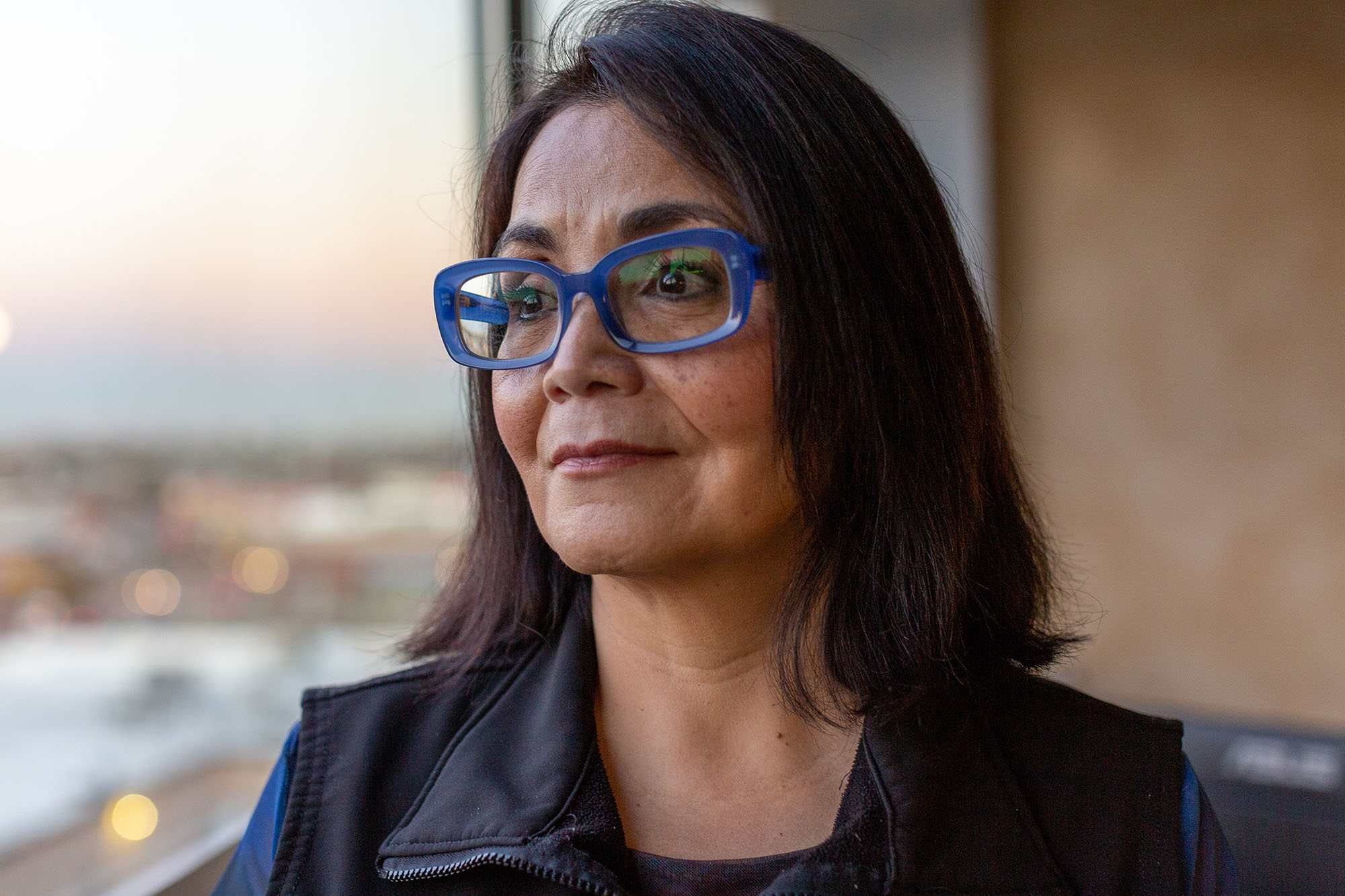
Remy is originally from Haiti. He’s in his 30s with braided hair and a thin beard. He has a wary way about him but also a restless hustle. About 10 years ago, he moved from Port-au-Prince to Boston, and for a while that was all he knew of the States. But when his wife, who is in the military, was stationed in Colorado Springs in early 2023, he started working at a Marriott there, driving shuttles of pilots to Denver International Airport. Despite constantly retreading the same ground, the view along the eastern front of the Rocky Mountains, with Pikes Peak soaring in the distance, never failed to impress him.
Remy had a TikTok channel, so he started shooting videos with narration in Haitian Creole and sharing them with his few dozen followers back home and those recently arrived in the United States. As Haiti has unraveled over the last few years, hundreds of thousands of migrants have fled the widespread violence and landed in the US in search of a better life. “I just started to show them how Colorado looks,” Remy said later. “Couple people, they told me, ‘You’re always talking about Colorado is nice, it’s beautiful. How about the jobs over there?’” For those Haitians with temporary visas, having full-time work could help their case to stay.
So Remy, who has a green card, figured he’d ask around. He was always driving by big businesses—warehouses, factories, construction companies—so why not drop in and see if they had any openings? One woman told him her company wasn’t hiring, but she knew a place where they were always looking for new workers: JBS. The company is the world’s largest producer of meat, especially beef. If you’ve recently eaten a burger at McDonald’s—or anywhere, really—there’s a good chance the meat came from JBS.
Mackenson Remy at the Rainbow MotelMary Anne Andrei
Remy looked up the address of the company’s plant in Greeley, about two hours from Colorado Springs. It was starting to snow, but he set out anyway. After navigating the icy highway and a long line of cattle trailers idling on the shoulder waiting to be admitted to unload their livestock, Remy inadvertently entered through the facility’s exit. Meatpacking plants usually have security tighter than Fort Knox—it’s illegal in several states, but not Colorado, to photograph or shoot videos near their property—but there Remy was, phone out and already recording, as he circled the parking lot. He looked for anyone he could ask about available jobs. Finally, a security guard stopped him and provided the name and phone number for an HR employee named Edmond Ebah.
Jobs at meatpacking companies are consistently among the country’s most dangerous.
Ebah, who had started at the plant after migrating to the United States from Benin in 2017, told Remy that JBS had about 60 positions available slaughtering, butchering, and packaging the meat. Yes, it was hard work, he emphasized. (According to data from the Occupational Safety and Health Administration, jobs at meatpacking and poultry companies are consistently among the country’s most dangerous.) But Remy’s Haitian followers could make good money. Best of all: It was a sure thing. If they came to Colorado, he would find them a job.
So Remy went home and cut together a montage of his footage from inside JBS and around Greeley and recorded a voiceover with the information from Ebah. This isn’t a job for lazy people, he says in Creole. But you don’t need to know English. And, if they came, Remy told his followers, he knew places they could stay. “Those apartment is pretty close from the job,” he told me later, translating the voiceover. So if you’re interested? “You can text me, tell me when you want to come.” He posted the video that night and went to bed.
The next morning, he checked TikTok. Most of his videos only got a few dozen views, but this one had been shared by a Creole-speaking influencer who often went by the handle JeanJean Biden—and it had gone viral. It was already at 35,000. Remy’s phone started blowing up, flooded with direct messages from people who wanted to know more. But Ebah had told him that they only had several dozen positions, so Remy texted him right away. Ebah seemed unconcerned. “100 200 people,” he texted back. “Have them just book theirs flights tickets to Colorado, you and I will take care of the rest…”
Remy told me he was still worried. Where would people live?
“Tell everyone just to come,” Ebah replied. “Don’t worry anymore about where there are going to live, trusted me.”
Ebah and his supervisors at JBS came up with a plan. The company struck a deal with the Rainbow Motel, a tiny motor lodge less than a mile down the highway from the plant, to house new Haitian workers recruited by Remy’s TikTok.
When an influx of Haitians arrived in Greeley, Colorado, in the winter of 2024, meatpacker JBS filled the Rainbow Motel on US Route 85 with its new recruits. Up to eight workers, men and women, were housed in tiny rooms there.Mary Anne AndreiForty more workers lived in this house.Mary Anne Andrei
But as these workers started to show up, it became clear that the job proposed in the videos was even harder than advertised. A local union representing workers at JBS, in complaints filed with multiple government agencies, would describe conditions at the motel as “squalor.” And inside JBS, the complaint says, this new crop of Haitian workers was asked to work at “dangerously unsafe” speeds. This past September, the union publicly accused JBS of abusing immigrant workers and human trafficking. (A JBS spokesperson told me that the company takes the safety and welfare of its employees seriously and that it follows all laws and regulations. The spokesperson also said that no substantiated evidence was provided that tied Ebah or company leadership to the claims outlined by the union.)
Since Donald Trump was elected to a second presidential term, things have only gotten worse. In January, Trump fired enough members of the boards of federal worker protection agencies to temporarily leave those bodies without a working quorum, effectively killing any investigations. Then, in February, the Trump administration announced that it would rescind the temporary protected status of more than 200,000 Haitians who had entered the United States legally during Joe Biden’s presidency. Trump reportedly intends to establish detention camps on military bases, including one in Colorado, to hold migrants while they are processed for deportation. Against this backdrop, the story of the workers in Greeley takes on new urgency and raises pressing questions. What does this country owe to the people it has admitted on humanitarian grounds? And what will we do without the workers who produce the lion’s share of our food?
Twenty years ago, at least one-quarter of all meatpacking workers were undocumented immigrants, mostly from Mexico. That changed on a single day. On December 12, 2006, Immigration and Customs Enforcement simultaneously raided six Swift & Company beef plants spread out across the country—in places like Grand Island, Nebraska; Cactus, Texas; and Greeley, Colorado. Federal agents and local law enforcement, many dressed in riot gear, entered and arrested 1,300 undocumented workers on charges of immigration violations and identity theft. It was the largest workplace immigration raid in American history. At the Greeley plant alone, 252 workers were arrested.
Swift needed to replenish its workforce fast. A Senate bill proposed expanding guest worker visas, but as a company spokesperson at the time said, “Our needs are year-round.” But few American workers were interested. Within about a month, the company reported its loss at $30 million. News reports at the time detailed the company’s attempts to start recruiting refugees who had migrated to the United States from places like Somalia and Myanmar. “Our survival was at stake,” a company executive said. But it wasn’t enough. In July 2007, Brazilian-owned JBS acquired Swift in a $1.5 billion all-cash deal.
With the purchase, JBS became the largest beef processor in the world. Months later, the company announced it would hire enough new workers to staff a second shift in Greeley, including some 400 Somali refugees. And soon, the rest of the industry followed JBS’s lead. Today, in many packinghouses, refugees account for as much as a third of the workforce. But most don’t last long on the line. The turnover rate is somewhere between 30 and 40 percent each year—one of the highest of any US industry. The reason is simple: The work is not only relentless, but often grueling.
The JBS meatpacking plant in Greeley, ColoradoMary Anne Andrei
These jobs are essentially like working on a dis-assembly line, a standard factory run in reverse. The live cow walks off the back of a cattle trailer and is slaughtered, then gets broken down into steaks and roasts and ribs and hamburger meat. When parts of a carcass slide by on the chain conveyor system, workers sink large meat hooks into those cuts—heavy loins or shanks or slabs of ribs—and then carve with a knife held in their other hand.
The pace of the chain is so fast—around 300 cattle per hour—that many can barely keep up. Workers at JBS and their union say the speed of the line makes serious injuries more commonplace. Complaints filed with OSHA detail ghastly injuries: a worker who was killed when he was hit in the head by falling machinery and knocked into a vat of chemicals; a worker whose arm had to be amputated after it was pulled into the sprockets of a conveyor belt. But more often, the injuries are from repetitive stress. Workers clutch the meat hooks for so many hours in such cold temperatures inside the refrigerated plant that they end up with carpal tunnel syndrome or trigger fingers or ulnar nerve palsy, known as claw hand.
In September 2021, after months of negotiations, Kim Cordova, president of the United Food and Commercial Workers Local 7 in Denver, finally reached a new collective bargaining agreement for workers at the Greeley plant. Cordova told me she pressed Tim Schellpeper, CEO of JBS USA, for improved safety standards, higher wages, more paid sick leave, and better health care benefits. Schellpeper finally gave in to the union’s demands—but in some ways the victory was short-lived. After JBS was found to have been using a third-party cleaning company that had been employing children, the Brazilian owners ousted Schellpeper and installed Wesley Batista Jr.—the son of one of the owners—as the new American CEO in May 2023. (JBS characterized these moves as a “reorganization”; the company settled a federal investigation into child labor charges for $4 million in January.)
Kim Cordova, president of the United Food and Commercial Workers Local 7, said many Haitian workers at the JBS plant in Greeley felt trapped.Mary Anne Andrei
Batista would prove less amenable to the union’s demands. Cattle prices had begun to climb as JBS reported a shortage in supply. Batista instituted a new work plan at the Greeley plant that Cordova told me is aimed at getting some of those profits back: the white bone program. “What the company is trying to do,” Cordova explained, “is get as much of the meat off a bone, as much yield off the animal, as possible. It’s literally a white bone.” She said this change meant more cutting. More repetition. More exertion. And all at a dizzying pace—“line speeds we had never seen before.”
Workers started quitting. And Cordova said the culture had shifted; union members weren’t willing to work under hazardous conditions anymore—they mobilized, staged walk-offs, or left for good. The union said JBS responded by looking for a more vulnerable and compliant workforce. “JBS needed a new group of workers to come in,” Cordova said, “so that they had more control over them, especially to work at this high speed.”
“JBS needed a new group of workers to come in so that they had more control over them, especially to work at this high speed.”
This was all in the air when Edmond Ebah met Mackenson Remy in December 2023. After Ebah began working on the slaughter side of the operation in 2017, he quickly rose to become an HR supervisor—in part because he speaks seven languages. But he was especially focused on recruiting new workers from his native Benin. In 2020, with JBS struggling to keep its lines running amid the pandemic, Ebah helped hire at least 30 new recruits from his home country, collecting newly created referral bonuses worth up to $1,500 per employee. He bought a van and started an LLC to carry them to and from the plant.
JBS presented Ebah’s story as a manifestation of the American Dream. He was building a private business on the side by providing jobs to his countrymen and a stable workforce for his employer. A banner with his picture above the word “humility” hung in the plant’s main hallway. The company posted to its LinkedIn page congratulating Ebah when he became a US citizen, and it touted his good work in recruiting new employees by producing a two-minute promo video shared on its website and social media channels. The camera work is all soft focus and slow motion. Ebah narrates his experience at JBS over a bed of lush strings. “I’m happy to do what I’m doing,” he says. “I can help people come to work for JBS.”
But after Remy’s TikTok video unexpectedly went viral, people started pouring in—more than Ebah could house at the Rainbow Motel. A hundred. Two hundred. And still, people kept coming.
Auguste calls his journey from Haiti to the United States “an epic experience.” Violent gangs now control about 90 percent of Port-au-Prince. Fearing for his safety, Auguste (not his real name) flew to Brazil in March 2023. From there, he set off north, traveling across 10 countries, walking and hitching rides for thousands of miles. The journey included hiking across the Darién Gap—a 60-mile expanse of thick rainforest at the Colombia–Panama border that separates South America from North America. He slept on the jungle floor, woken in the night by the sounds of wild animals. He was always on guard because people warned him of armed thieves who would rob people—or worse. And then, of course, there were the dead. He saw bodies of people along the way who would never finish the journey. In lakes. On the shores of rivers. By the roadside.
Yet Auguste was never afraid. He believed in himself. He had faith that if others had made this journey, then he could make it, too. And he did. It took a month, but he finally reached Mexico, where he immediately used the online app CBP One to apply to enter the US legally via temporary protected status—TPS for short.
The Biden administration made extensive use of TPS. When Biden first took office, he used this executive authority to protect Afghans after the Taliban retook Kabul. Then he extended the policy to Ukrainians after Russia invaded. Between 2021 and 2023, Biden took a more controversial stance—expanding TPS to include people fleeing dictatorships and gang violence in Venezuela, Nicaragua, and Haiti. Today, Haitians make up one of the largest groups with temporary protected status.
Biden’s decision allowed Auguste to legally live and work in the United States—without a path to citizenship, but also without the threat of deportation. Auguste entered the country in May 2023 and made his way to Baltimore, where he stayed with family. Until his work visa was approved, he was unable to make money and would often go hungry. But, he told me, “It’s easier to live without food than it is without hope.”
He’d been in the US for six months when a friend showed him Remy’s TikTok. Auguste was skeptical at first, so he let his friend go ahead to Greeley. When the friend reported back that the job was legit, Auguste booked his flight to Colorado. He says he paid Remy $120 for a ride from the Denver airport to the Rainbow Motel. That’s when he realized the hardships he’d endured to make it to the US weren’t exactly behind him.
Up to eight Haitian workers, men and women, were housed in tiny rooms at the Rainbow Motel in Greeley, Colorado. Mary Anne Andrei
All the workers packed into the motel’s tiny rooms were in a strange place, with little to no money. There was also nowhere to make food. Auguste says that at one point, they got a hot plate so they could cook. But when the motel managers found out, they stopped them. Those managers later reported to JBS that it appeared workers had been using the bathtub as a cutting board. Auguste explained that the motel was off a busy highway with little around for miles. It wasn’t easy to walk anywhere to eat. Plus, it was the dead of winter and freezing outside. They had no money to order a ride, and if they did, what would they tell the driver? Many didn’t speak English. They felt stranded.
And then, there was the work. Auguste didn’t want to say where, exactly, he is on the line, for fear he could be identified. But he is on the “cold side,” the refrigerated side of the plant where beef is trimmed, cut, and packaged. He works with a meat hook and knife. He told me he was shocked by the speed and strain of the job. He’s not alone. I spoke to four current and former line workers from Haiti who said the pace was fast and kept getting faster as more Haitians were hired. The Denver Post reported that one worker filed a formal complaint with the Equal Employment Opportunity Commission, alleging that JBS intentionally discriminates against Haitian workers by subjecting them to unsafe and unequal working conditions.
According to the complaint, the speed of the chain on the A shift is usually between 250 and 300 head of cattle per hour. But as Haitians arrived and were put on the B shift, which runs from about 2 to 11 p.m., the chain speed at night allegedly pushed past 400 head per hour, to as much as 430. “We have people that have been working at the plant for 10, 15 years,” one union representative told me. “They have never seen any chain speed going over 390.”
Cordova, the Local 7 president, said complaints started pouring into the union offices. “New hires are now largely comprised of Haitian refugees,” an official complaint filed by the local with the Department of Labor alleges. The complaint claims that JBS “increased chain speed to dangerously unsafe levels when these workers occupied the line.”
The alleged exploitation didn’t stop there, according to the union complaint. The union suspected that applications for this new group of workers were being submitted with one mailing address for everyone—Ebah’s home address. “The hiring manager and connected individuals likely have control over incoming mail to these workers,” the union alleges. Letters were withheld. And Haitian workers were forced to sign documents in English that waived their rights after on-the-job injuries, “with workers not understanding what they were being asked to sign.” Many, Cordova said, felt trapped.
One woman told me that the conditions were so bad at the motel that she agreed to be “the girlfriend” of a more established line worker to have someplace safe to stay.
Meanwhile, Auguste and his fellow Haitians would go back to the Rainbow Motel with little to no food, a line for the bathroom, and only the floor to sleep on. One woman told me that the conditions were so bad there that she agreed to be “the girlfriend” of a more established line worker, just to have someplace safe to stay and something to eat. At one point, there were almost 50 Haitian workers staying in only nine rooms.
Auguste told me he can’t shake the humiliation. Every day at work, he walked through the slaughter side of the plant, where each cow has its own little holding pen, but he was expected to share a tiny space with five of his co-workers. He found himself thinking the cows had it better. “I feel like,” he said, “I was being treated as a slave.”
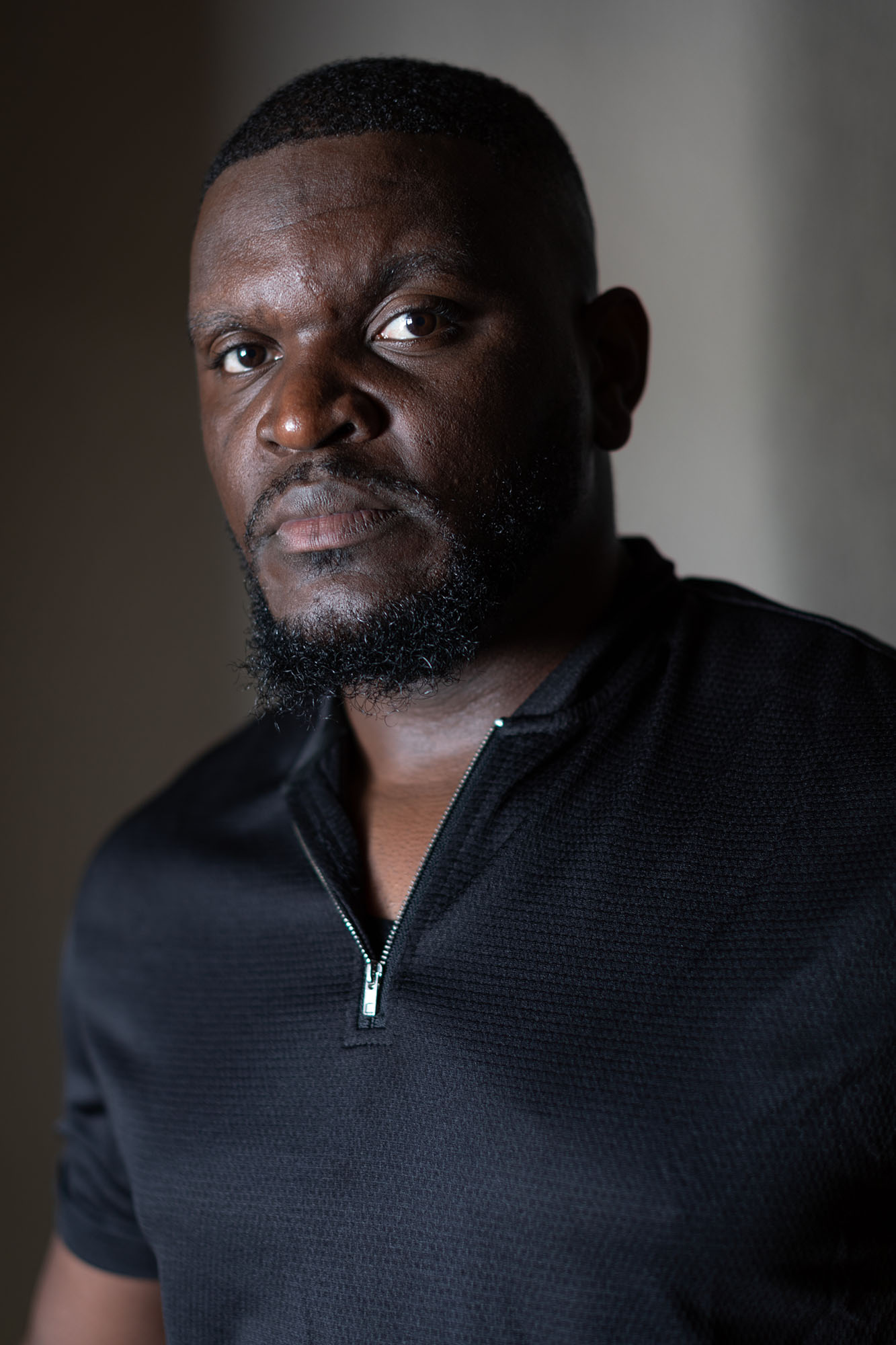
“I would not say I’m a victim of the process,” Tchelly Moise told me, “but I was a direct witness.” It’s hard to know whether the union would have even been aware of the dismal conditions at the Rainbow Motel if it weren’t for Moise, a Haitian line worker at JBS who had taught himself to speak nearly flawless English by watching YouTube videos and then working in a call center. Moise came to the US via a long journey from Nicaragua in 2023 after he was shot in the chest in a robbery and nearly died. Once he was allowed into the United States, he discovered his cousin had found a job working at JBS through a TikTok video.
Moise flew to Colorado and his cousin drove him to the Greeley plant for an interview, where his language skills quickly came into use. None of the other applicants spoke English, and the HR manager was struggling. Moise translated for 30 job interviews and was offered a job in the packing plant on the spot.
Tchelly Moise, a Haitian immigrant, worked for JBS and is now a union representative. He fled to the US through Nicaragua and traveled through Central America to Mexico—where he was approved for temporary protected status.Mary Anne Andrei
In the meantime, his cousin had started to pick up extra money—as a driver for Mackenson Remy, who was shuttling in recruits whom he’d connected with Ebah at JBS, taking them to work and driving them around town. Moise was along for one of the pickups at the Rainbow Motel. “You have eight people inside of that one little motel room with one bed, one bathroom, women and men at the same time?” he told me. “It was a very bad situation.” Moise said the motel finally got so packed that Ebah was forced to rent a house nearby. But it wasn’t much better.
There were around 40 people living inside a five-bedroom house, he said. “I’m saying people sleeping on the floor, on the blanket, people everywhere. And at some point, they didn’t have electricity in the house and it was winter, so you can imagine how bad the situation was.” Other workers, including Auguste (who lived at Ebah’s rental house for five months), confirmed that the electricity and water often went out.
Because Moise is fluent in English, some of the Haitian workers asked him to carry forward complaints to the union. Cordova soon told JBS that Ebah was charging workers for rides to work and putting his name on referral bonuses. JBS opened an investigation in December 2023 into Ebah’s activities, suspending him for several months during the process. Lawyers conducted more than a dozen interviews with employees.
But when the investigation was complete, Ebah was merely reprimanded, and he returned to JBS’s plant. Remy and Ebah continued their recruitment work. Cordova continued to press the company before finally reaching out to a reporter at the Wall Street Journal. In August 2024, JBS opened a second investigation.
The next month, the Journal published its story. Remy was featured throughout, alongside allegations of exploitation from the very Haitians he thought he was helping. Some workers alleged that Remy was working with JBS and getting paid $3,000 for every worker he brought to Greeley. He denies this. He says the company never paid him anything. (A JBS spokesperson said Remy never worked for the company and it notified local authorities and banned him from the premises.)
With these allegations made public, JBS was forced to respond. In an email to the Journal, JBS said it fired the two HR managers above Ebah and that Ebah was moved to a different facility in Greeley. The company said it also put in new training programs to teach employees about proper recruitment.
Still, the union kept demanding answers. “We have been dealing with what we believe is human trafficking and exploitation,” Cordova said, arguing that the workers were brought to Greeley under false pretenses. They were promised a good job and a place to stay but instead found unsafe work conditions and substandard housing.
“We have been dealing with what we believe is human trafficking and exploitation.”
JBS maintains that its leadership didn’t know what was happening at the Rainbow Motel, but I’ve seen the texts between Ebah and Remy. Ebah asked Remy who was being checked into the Rainbow Motel. Remy replied with five and six names to a room. After the Journal article came out, Ebah abruptly cut ties with Remy and hasn’t been in contact with him since.
The union hoped for a federal investigation into JBS. But that’s looking less and less likely in the current political climate. “While we were exposing this,” Cordova told me, “Trump, during his campaign, made up these crazy statements that Haitian workers were eating people’s pets—you know, their cats and dogs.” Now the Trump administration plans to evict them.
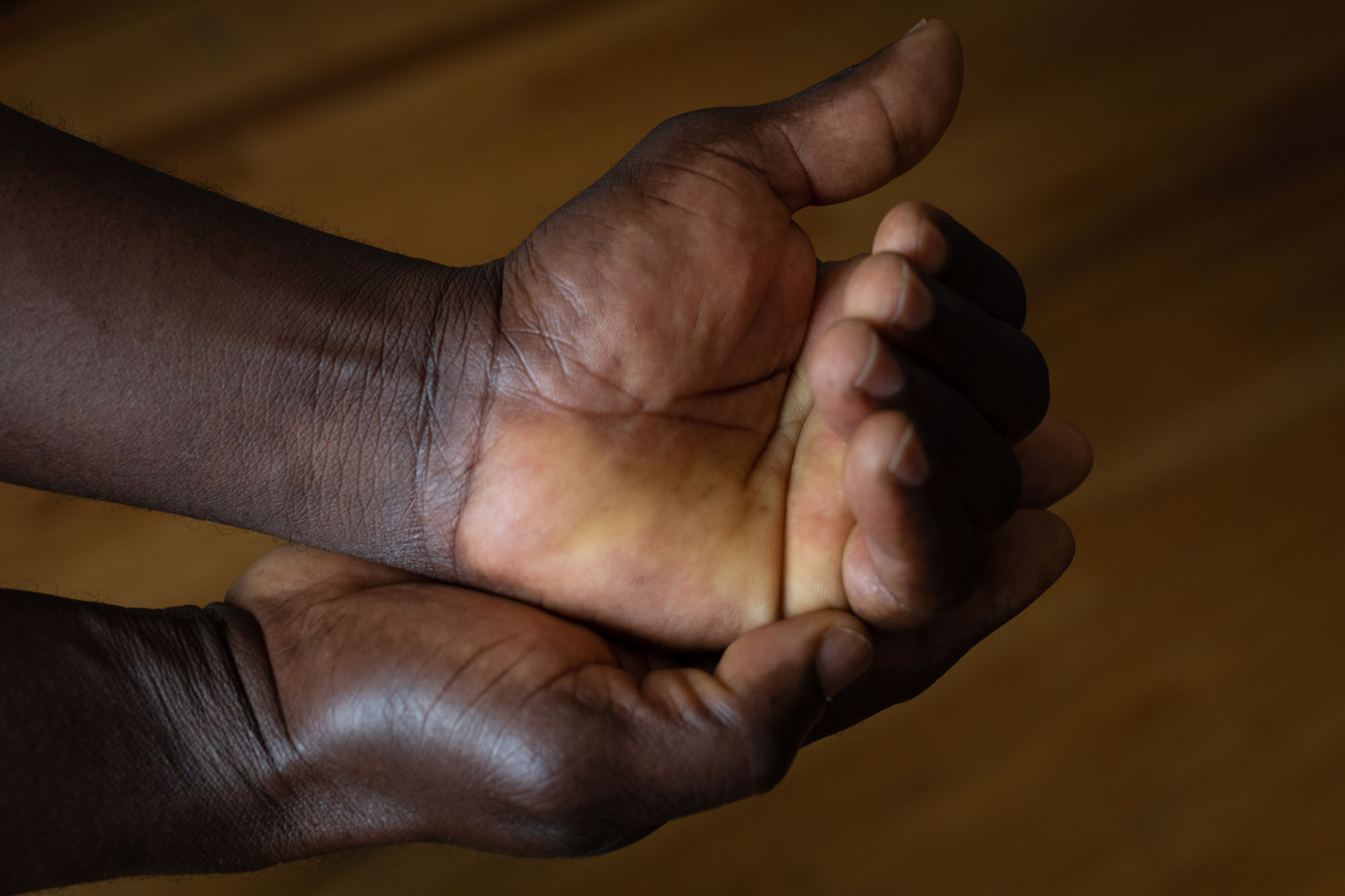
Auguste shows how he is unable to close his left hand fully after working for months on the meatpacking line.Mary Anne Andrei
In the days after his inauguration, Trump issued a series of executive orders directing federal agencies to go after undocumented immigrants. Then in February, his administration started to go after legal immigrants, rescinding the temporary protected status of Venezuelans and then Haitians. If that policy remains in place, more than a million people will be forced to leave the country before August 3, including nearly all the Haitian workers who arrived at the JBS plant in Greeley because of Remy’s TikTok video.
When I spoke with Moise the day after TPS was revoked for Haitians, he was still in shock. “I can tell you honestly,” he said, “this is the first time I feel like this is really happening.” He told me that he kept thinking that Trump officials would look at the violence in Haiti—where more than 5,600 people were killed in 2024 alone—and conclude that they simply couldn’t send people back home. “Going back to Haiti is a death sentence, really,” Moise told me. “We left the country, obviously, because it was very bad. You’re talking to some members at the plant, and they are telling you, ‘Man, my cousin just got killed today,’ or ‘My family members, they just burned down their house.’ So it’s getting worse every day.”
None of that seems to matter to this administration. The man in charge of Trump’s deportation plans—and his new deputy chief of staff for policy—is immigration hardliner Stephen Miller, who has said his goal is to arrest and deport as many immigrants as possible. He has vowed to use federal law enforcement, National Guard troops, and local police to carry out major sweeps of public spaces and raid workplaces. Those plans make little sense to Cordova. “This workforce is an immigrant workforce,” she told me. “The industry would collapse without these type of workers.”
Not to mention what this would mean for us, the consumers. In his campaign, Trump promised he would lower grocery prices. Instead, tariffs on Mexico and Canada threaten to send food prices soaring. Deporting the immigrant workforce that meatpackers depend on would halt processing at every stage of the supply chain, from feedlots to the packinghouse floor. This would drive up prices for Big Macs and Outback steaks, but also for chicken breasts and pork chops at grocery stores, for Hormel bacon and Campbell’s soup and Oscar Mayer hot dogs.
“I feel like us, the immigrants, we are a good part of the economy,” Moise told me. “Most of the jobs that we are doing, people who are born in this country are not actively looking to do those jobs.” This is why Moise said he’s confused. If mass deportations hurt not only JBS, but the economy as a whole, why do it? He’s left with only one answer. “I think it’s just hatred against people with different skin color, because that’s the only logical thing that I can actually see.”
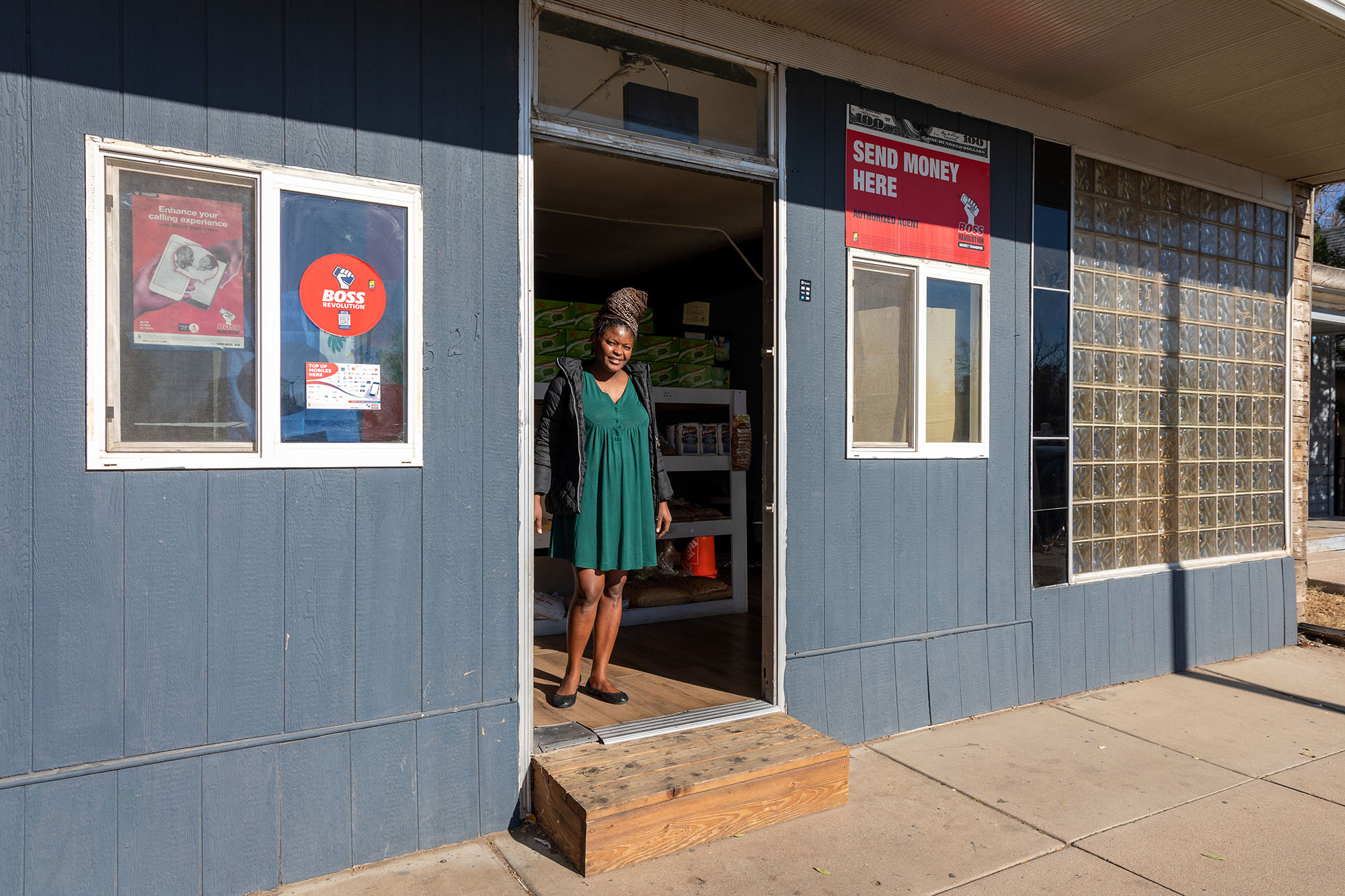
A shop worker stands in the doorway of a Haitian grocery store in Greeley, Colorado. As Haiti has unraveled over the last few years, hundreds of thousands of migrants have fled the widespread violence and landed in the US in search of a better life. Mary Anne Andrei
Given the animosity and the threat of deportation, you might expect that Moise would be making plans to flee to Canada or elsewhere, but for now anyway, he says he’s planning to stay put. After witnessing how badly new hires were being treated at JBS, he left his job there and now works for the union. He has retained an immigration lawyer and has a pending asylum application. But if Trump sets up deportation camps and fast-tracks hearings, as he has threatened to do, Moise doesn’t know what he’ll do.
Neither does Auguste. He still works at JBS. After about six months, he was able to save enough money to move into his own place, with his own bed and bathroom. But it all comes at a cost. The white bone program is still going on at JBS in Greeley. And Auguste told me that he can no longer fully close his left hand—an injury he says is a result of gripping a meat hook for hours without breaks, of his work being too fast and too repetitive.
Despite everything, Auguste told me he’s still glad to be in the United States, because his life is stable now. He knows all the things Trump has threatened to do, but he’s trying to stay optimistic. Because he doesn’t believe Americans will really let mass deportations happen. After all, he said, “the USA is the mother of democracy.”
“I don’t think they know the power that Trump is actually going to have.”
It’s hard to share Auguste’s hopeful outlook. Yes, it’s possible that federal courts might intervene, hearing lawsuits from Haitians as they already are in cases brought by Venezuelans. Or some governors might step in. Colorado Gov. Jared Polis has vowed to help companies “retain their employees who are doing work critical to our economy—whether in agriculture, construction, service, or industry.”
But this broad-sweeping government crackdown? It will be difficult to oppose. It’s what Americans voted for.
Moise said he fears most Haitians don’t understand this. “I don’t think they really see the threats that is coming,” he told me. “A lot of them, they feel secure, maybe because of TPS, because they know they already filed for asylum. So I don’t think they know the power that Trump is actually going to have.”
Moise said he feels like his life is in Trump’s hands now. His life and the lives of thousands of other JBS workers in Greeley—and at dozens of similar plants in similar towns across the middle of America. The nearly million people who were granted entrance to our country because they were in danger and they sought protection within our borders. They followed all the rules—filled out the paperwork, allowed their cheeks to be swabbed, their fingerprints to be taken. They risked everything to come here and were allowed to cross the border legally. They trusted the United States to grant them asylum and protect them.