Category: News

  • Father of woman accused of 2023 Sapporo murder given suspended sentence

    Father of woman accused of 2023 Sapporo murder given suspended sentence

    [ad_1]

    The father of a 30-year-old woman suspected of killing and beheading a man in Sapporo’s Susukino district in 2023 was sentenced on Wednesday to one year and 4 months in prison, suspended for four years, for helping her move the body to their home.

    The key issue of the trial was whether Osamu Tamura, a 61-year-old psychiatrist, was aware of his daughter Runa Tamura’s plan to murder the victim in advance. Prosecutors had sought 10 years’ imprisonment for the defendant, who had pleaded not guilty.

    In July 2023, a 62-year-old male company employee was killed and decapitated at a love hotel in Susukino, Sapporo’s entertainment district. Runa Tamura allegedly put the man’s head in a suitcase and brought it back home, where it was later discovered by investigators in the bathroom of the family’s residence. A video of a gloved hand touching the head was also discovered during further investigations.

    [ad_2]

    Source link

  • London revealed as most popular city for a Mother’s Day spa break

    London revealed as most popular city for a Mother’s Day spa break

    [ad_1]

    Wowcher reveals the top 20 cities for a spa break ahead of Mother’s Day – as expert explains the benefits behind mums practicing self-care. With Mother’s Day approaching fast, many will want to show their appreciation to the mother figure in our lives. And while flowers, chocolates or handmade gifts can be thoughtful gestures, nothing beats quality time together.

    For the perfect chance to unwind and switch off from the stresses of everyday life, spa breaks provide the perfect retreat. And a psychologist and parenting expert now reveals how this can help towards family bonding. Clare Ford reveals why having dedicated quality time within the family is so important for a person’s self-esteem – and how experiences such as a spa can help deepen levels of trust and communication.

    If you’re planning on booking something, Wowcher can help you secure a deal. Ahead of this year’s Mother’s Day, they’ve revealed a definitive list of the most popular spa destinations in the UK and Ireland. When it comes to the city that has seen the most spa days sold in the past 12 months, London came out on top with 40,263. Glasgow followed behind in second, receiving 11,009, and Newcastle placed third with 9,468.

    Top contenders on the list included Birmingham, Edinburgh and Leeds, while the likes of Liverpool, Dublin and Cardiff also made the top 20. Looking at the number of deals and merchants within each location in the past year, Scottish city Aberdeen came out on top with the highest number of deals of 13 – while Bath and Belfast followed closely behind on the list.

    Birmingham had a total of eight merchants altogether, and the highest number of deals in the past 12 months (30). Meanwhile, Blackpool was a top competitor with a total of 18 deals altogether. Speaking to Wowcher, psychologist and parenting expert Clare Ford reveals:

    Why is quality time between mothers and children so important?

    “Spending focused, distraction-free time together strengthens emotional bonds, boosts children’s self-esteem, and improves their resilience and social skills. Research has even demonstrated that kids who have strong, positive interactions with their parents are more emotionally balanced and less likely to develop behavioural issues.”

    Why are shared experiences, like spa breaks, great for connection?

    “Experiences like spa days offer quality, undistracted time together, away from screens and daily stress. Activities that encourage relaxation and conversation help deepen trust and communication, making them far more meaningful than passive time spent in front of a TV. Shared experiences strengthen family bonds and create lasting memories. Spas aren’t just a luxury either. They provide a mental reset. They can lower stress and provide mental well-being, which is crucial for mothers.”

    Why is it important for mothers to model self-care?

    “Children learn by example, and when a mother prioritises her own well-being, she teaches her children that self-care is not selfish – it’s essential. By setting boundaries, taking time to relax, and looking after her mental and physical health, she helps her children develop a healthy relationship with rest and self-worth. This is especially important for daughters, who often mirror their mother’s approach to stress and self-care in adulthood. Children learn not from what we say, but from what we do.”

    Most popular cities in the UK for spa breaks

    City Bookings received (last 12 months)
    London 40,263
    Glasgow 11,009
    Newcastle 9,468
    Birmingham 6,598
    Manchester 5,136
    Edinburgh 4,198
    Leeds 3,271
    Liverpool 2,781
    Essex 2,653
    Wolverhampton 2,213
    Sheffield 1,973
    Kent 1,799
    Bristol 1,684
    Dublin 1,645
    Stoke-on-Trent 1,430
    Cardiff 1,429
    Nottingham 1,399
    Coventry 1,341
    York 1,066
    Brighton 1,028


    Top 20 cities for spa deals 

    City Number of spas Number of deals
    Birmingham 8 30
    Coventry 8 27
    Blackpool 5 18
    Aberdeen 5 13
    Bristol 3 11
    Cardiff 3 10
    Dublin 4 10
    Cambridge 1 9
    Edinburgh 5 9
    Essex 4 9
    Belfast 5 7
    Bournemouth 2 5
    Bradford 3 5
    Derby 1 5
    Galway 3 5
    Blackburn 1 3
    Brighton 2 2
    Bath 1 1
    Cork 1 1
    Cornwall 1 1


    Feature Image by Erika from Pixabay


    [ad_2]

    Source link

  • Your browser is not supported

    [ad_1]

    Your browser is not supported | democratandchronicle.com
    logo

    democratandchronicle.com wants to ensure the best experience for all of our readers, so we built our site to take advantage of the latest technology, making it faster and easier to use.

    Unfortunately, your browser is not supported. Please download one of these browsers for the best experience on democratandchronicle.com

    [ad_2]

    Source link

  • Millennial Parents Are Obsessed With Weird, High-Tech Baby Gear

    Millennial Parents Are Obsessed With Weird, High-Tech Baby Gear

    [ad_1]

    This year’s hottest new consumer tech product isn’t a personal robot or a self-driving car — it’s a crib.

    The $800 Elvie Rise, which debuted in January at the annual CES tech trade show, is an app-controlled bouncer that automatically repeats a baby’s unique preferences and can transform into a bassinet after an infant falls asleep. Why exactly should you shell out for a “smart bouncer” when other products do basically the same job for hundreds of dollars less? Elvie says it comes down to infant safety: In a company survey of American parents, a majority of respondents with newborns said they were using products that didn’t meet some federal safe-sleep guidelines. Elvie’s claims implicitly suggest that dropping nearly a grand on a product that’s meant to be used for only six months of a child’s life isn’t only sensible but also the responsible thing to do.

    Elvie is far from the only company cashing in on parental anxiety. Baby-product peddlers have learned that it pays to remind new parents of the myriad dangers that lurk around every corner and threaten their helpless bundles of joy. If they play their cards right, companies can position their wares as the answer to a parent’s darkest fears.

    Savvy entrepreneurs are also taking advantage of the growing overlap between evergreen parental anxieties and the distinctly modern impulse to always be optimizing through gadgets and apps. CES launched its annual BabyTech Summit in 2016, where the now legendary Snoo smart bassinet debuted the following year with a $1,200 price tag. Since then, the baby-tech market has boomed with products such as the Owlet Dream Sock (an app-linked “smart sock” that lets parents track their baby’s vital metrics) and the Nanit Plus smart baby monitor (whose night-vision-equipped video camera can track an infant’s breathing), as well as a slew of WiFi-enabled breast pumps (including a nearly $400 model from Elvie). Between 2018 and 2019, submissions to CES’s Best of Baby Tech Awards increased by 88%. And in 2024, EMARKETER found that products for babies and children had the fastest-growing digital ad spend of any market category. These days, it’s hard to avoid the tens of thousands of moms who have taken to TikTok to show off their favorite devices.

    As more millennial and Gen Z “digital natives” become parents, it’s no surprise that devices providing real-time data on a baby’s squirms, temperature shifts, and even bowel movements are hot commodities. But while this information is reassuring to some parents, it can exacerbate anxiety in others — particularly those already struggling during the fraught, sleep-deprived months of early parenthood. Instead of fueling connection, some of the products might even make parents less attuned to their kids and to themselves.


    From the very beginning, the baby-tech industry has been sown in the threat of worst-case scenarios. The first commercial baby monitor — a simple radio-based device — landed in American nurseries in 1938, a mere six years after the nation was rocked by the kidnapping and murder of the aviator Charles Lindbergh’s 20-month-old son. In the 1980s and ’90s, the devices became commonplace as fear spread about cases of sudden infant death syndrome in babies’ cribs. By the early 2000s, baby monitors were getting regular tech upgrades, from cameras and two-way communication to heart-rate and temperature monitoring and even REM sleep cycle detection. Though these updates weren’t necessarily filling a void in what parents needed, they quickly found a market.

    Becca Susong, a Chattanooga, Tennessee, pediatrician and perinatal care consultant, says fear of SIDS continues to be a major driver behind parents’ interest in purchasing the WiFi-connected, app-paired baby monitors that emerged after the rise of smartphones. Some parents — especially those with neonatal intensive care unit experiences or past health scares — say they feel reassured by features like oxygen and heart-rate tracking. But there’s no clear evidence linking baby monitors to a decrease in cases of SIDS, so the American Academy of Pediatrics actually cautions against monitoring for it at home.

    “I tend not to recommend getting the high-tech kind,” Susong says about baby monitors, citing their high costs and unnecessary bells and whistles. Instead, she redirects the discussion to sleep safety like using a firm mattress with nothing else in the crib and putting the baby on their back to sleep — tangible, science-backed methods for averting SIDS.

    “I think they give people a sense of control over something that feels very uncertain,” says Emily Guarnotta, a Long Island clinical psychologist who specializes in perinatal mental health. “SIDS is terrifying because it’s so unpredictable.”

    Eventually, baby-tech merchants got a little carried away by the market possibilities. A $3,000 self-driving AI stroller? Yours for the taking, courtesy of the Canadian startup Glüxkind.

    Guarnotta says she’s observed that type A, control-seeking parents are particularly prone to look for reassurance from baby-monitoring devices. “There are many times when fear of something happening is already present, and then a product comes along or is recommended, and you think, ‘This is going to help me. This will make me feel better and keep my baby safe,’” she says. “It can turn into a vicious cycle — you get some relief from using the product, but then the anxiety returns, and the cycle repeats.”

    David Lesner, a 39-year-old software engineer who lives in Israel, acknowledges that part of the initial appeal of a smart baby monitor was the gadgetry itself. Before his 11-month-old son was born, he spent countless hours descending into Reddit rabbit holes to figure out which models parents liked best. But Lesner says that even his final, meticulously considered pick — the Nanit Pro — is less than perfectly accurate. While he’s never experienced one of the monitor’s false alarms that his baby had stopped breathing or moving, he says he knows others who have. “It can be very terrifying,” Lesner says. “Those three seconds that you are going from one room to another to see that your child is fine can be like an eternity.”

    Not even a few false alarms could deter Logan Blackburn-Issitt, a 41-year-old entrepreneur in the West Midlands, England, who used infant-movement-detection devices with all six of his children. The four older kids, now between 7 and 13, slept on an Angelcare sensor pad, which sounds an alarm if it doesn’t detect movement for 20 seconds. The youngest, 3-year-old twins, wore Snuza Hero movement monitors clipped onto their diapers. If Blackburn-Issitt or his partner forgot to switch off the pad when they lifted their babies out of the crib, or if the Snuzas got jostled out of place, the devices would blare. But if anything, these occasional mishaps only fortified his peace of mind. “If the babies stopped breathing, we would be alerted quickly,” he says.


    Eventually, baby-tech merchants got a little carried away by the market possibilities. A $3,000 self-driving AI stroller? Yours for the taking, courtesy of the Canadian startup Glüxkind, which launched its first of two smart-stroller systems in 2023. (But be warned: There’s a waitlist for its anchor product, the Ella.) How about a Bluetooth-connected diaper sensor that spares caretakers from sniff-checking for number twos? Look no further than the Korean startup Monit, whose smart-baby-monitor system was the talk of the 2019 BabyTech Summit — though the high-tech poo detector proved a little too weird to gain market traction. Or what about an AI-powered changing pad? The startup Woddle is on a mission to bring fresh data insights to the changing table. But it’s still to be determined whether there’s a real market for a tech-infused mat for changing diapers.

    Combining a gloss of scientific credibility with promises of safety and efficiency, the allure of baby-tech innovation outstrips its occasional silliness. The industry meets its target customers at the intersection of some of our most deeply entrenched habits. Millennials, who now make up the largest share of new parents, have entered their child-rearing years amid the proliferation of network-connected home appliances, wearable fitness-tracking devices, and urban infrastructure designed to make everyday tasks more efficient and convenient. In the past several years alone, the “Internet of Things” has evolved from a novel subcategory of consumer products to a term that encompasses so much of what we buy and use that it barely warrants distinction. Add a dose of standard-issue parental worry to this tech-propelled drive toward optimization, throw in a revolving cast of parenting experts and influencers, and you have a consumer base that’s perfectly primed to seek solace in stuff.

    In an ideal world, new parents would become more confident in reading and responding to their baby’s cues without feeling the need to rely on gadgets and apps.

    Of course, there are baby-product innovations that have seriously improved people’s lives. Balance bikes, for instance, have been found to better prepare kids for riding a real bicycle than the training wheels most of us grew up with. And countless articles and testimonials have praised everything from the Snoo bassinet to the Doona car-seat-stroller combo as life-changing.

    But optimizing everything doesn’t always make life easier. Ellie Messinger-Adams, a Southern California mom of two in her mid-30s, used Wyze baby-monitoring cameras for both of her children, now 6 and 3, until about a year ago. While the cameras provided momentary reassurance that her kids were alive and well in the middle of the night, checking them wound up becoming something of a compulsion. “We don’t have any of the cameras hooked up anymore, and it sort of feels like freedom,” she says.

    “If a mom is already feeling overwhelmed, distressed, or excessively worried, adding the responsibility of monitoring data and interpreting its meaning could make things worse, increasing hypervigilance and potentially worsening anxiety or postpartum OCD,” Sogand Ghassemi, a perinatal psychiatrist who practices in Brooklyn Park, Minnesota, says. In an ideal world, new parents would become more confident in reading and responding to their baby’s cues without feeling the need to rely on gadgets and apps. And it’s not only the parents whose emotional well-being stands to benefit from a more intuitive dynamic of communication and care. “Over time, this supports the baby’s ability to develop self-soothing skills, which is important for resilience,” Ghassemi tells me.

    When it came to raising her own two children, Guarnotta, the Long Island psychologist, was firmly “anti-baby monitor,” she says. It’s a matter of personal preference, she tells me. Seeing other parents obsess over surveilling their babies was enough to convince her she was better off going the old-fashioned route: listening for cries and responding to them. A fancy, camera-equipped monitor wouldn’t be able to tell her anything she couldn’t hear for herself.

    “I’m already an anxious person,” Guarnotta says. “I didn’t really want any part of that.”


    Kelli María Korducki is a journalist whose work focuses on work, tech, and culture. She’s based in New York City.

    Business Insider’s Discourse stories provide perspectives on the day’s most pressing issues, informed by analysis, reporting, and expertise.


    [ad_2]

    Source link

  • A scripted video showing a Muslim father and daughter claiming to have married each other is being shared as a real incident

    A scripted video showing a Muslim father and daughter claiming to have married each other is being shared as a real incident

    [ad_1]

    A video going viral on social media (here, here, and here) claims to show a Muslim father and daughter stating that they married each other. The post is being shared as if it is a real incident. Let’s verify the claim made in the post through this article.

    The archived post can be found here.

    Claim: Video shows a Muslim father and daughter saying that they married each other.

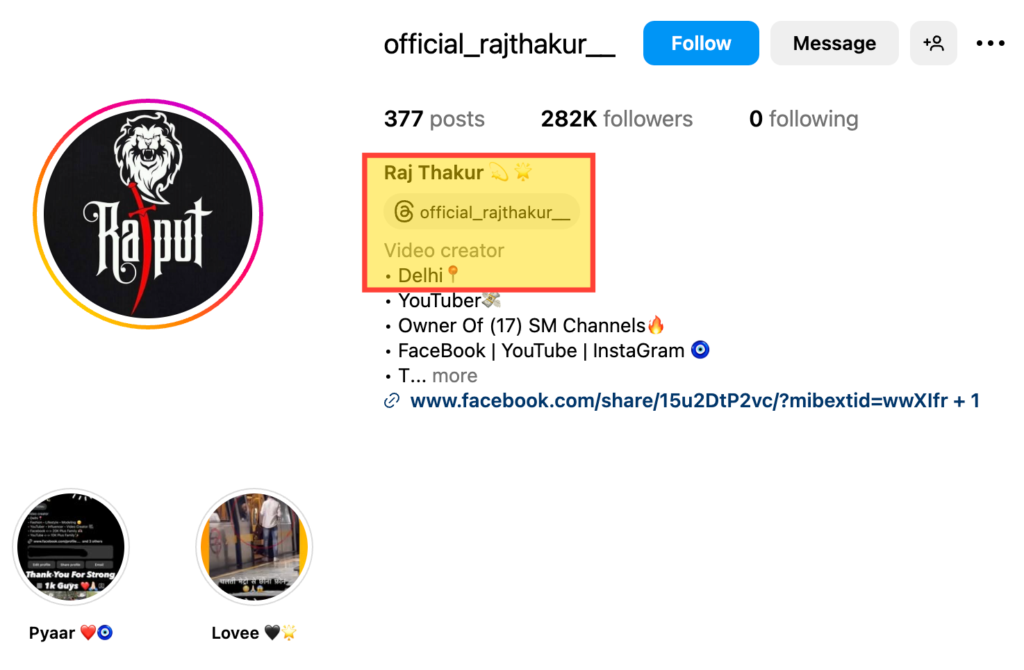
    Fact: The viral video is scripted and does not depict a real incident. It was uploaded by Raj Thakur, a video creator, on his Facebook handle on 05 March 2025. Hence, the claim made in the post is FALSE.

    A reverse image search of the keyframes from the viral video led us to an Instagram post by Raj Thakur (@official_rajthakur__) dated 06 March 2025. The post featured the same video (archived) and stated that it is entirely scripted and does not depict a real incident. It also mentioned that the full video is available on Raj Thakur’s Facebook page. The same video was uploaded on his YouTube channel on 05 March 2025, with a similar description.

    We noticed that he describes himself as a video creator from Delhi on his Instagram bio.

    We also found the link to Raj Thakur’s Facebook handle in his Instagram bio. Upon reviewing his Facebook handle, we found the extended version (archived) of the viral video.

    To sum up, the viral video is scripted and does not show a real incident. It was created by Raj Thakur and uploaded to his Facebook handle on 05 March 2025.


    [ad_2]

    Source link

  • Bereaved Mother Donates Bleed Kit To Popular Harold Hill Pub. – The Havering Daily

    Bereaved Mother Donates Bleed Kit To Popular Harold Hill Pub. – The Havering Daily

    [ad_1]

    On Sunday 9 March, Sue Hedges from the Ricky Hayden Memorial donated a Daniel Baird bleed bag to the Deers Rest Pub. Sue, who lost her son Ricky to knife crime in 2016, has been donating vital life saving bleed kits to many organisations across Havering, London and parts of Essex in a bid to save as many lives as she can.

    Sue was joined by Harold Hill community champion Jan Sargent who has been supporting the donation of the Daniel Baird bleed kits.

    Sue told the Havering Daily: “Thank you to the Deers Rest for taking a Daniel Baird bleed bag. They are proven life savers and we are grateful to all the organisations who host them on their premises.

    “Thank you to Jan for her continued support.

    “The Daniel Baird bleed kits have been used many times to save lives and unfortunately they are vital on our streets at the moment with the way knife crime is. It really is an epidemic that no one is actually willing to tackle. Throwing money and not really dealing with the root causes of knife crime, does nothing.We must work together as a community.”

    L-R Jan Sargent, Sue Hedges, and the ladies from the Deers Rest Pub.


    Stay up to date with all of our latest updates and content by following us on our social media accounts!


    We have created community pages where we will share our up-to-date stories happening in the area. Add the area closest to where you live.


    [ad_2]

    Source link

  • A baby sea lion performs rhythmic gymnastics feats in Washington state

    A baby sea lion performs rhythmic gymnastics feats in Washington state

    [ad_1]

    TACOMA, Wash. — A baby sea lion toting an artificial kelp strip was filmed performing intricate rhythmic gymnastics-esque circles through the waters of an aquarium in Washington state.

    Although only 9 months old and still reliant on her mother’s milk, Pepper has become the Point Defiance Zoo & Aquarium’s most acrobatic sea lion, said Noelle Tremonti, a staff biologist for the aquarium.

    “We always joke a little bit that she’s acting as a ribbon dancer because it does look so artistic under the water and shockingly beautiful under the water as well,” she said. “But also just makes me really happy to see her interacting with enrichment in such a focused way.”

    The dizzying circles performed in Tacoma, Washington, about 34 miles (55 kilometers) south of Seattle, last month are part of the sea lion’s many enrichment activities. The strips help the pup learn how to interact with kelp, which it would be around a lot in its natural environment, and how to explore its environment using its mouth, said Tremonti.

    The strip, which is made out of heavy duty felt material, is just small enough for Pepper to grab and manipulate, said Tremonti. In the video, the sea lion pulls it with its flipper while chasing the tail end to create the graceful circles and later clamps down on the strip with its mouth.

    Pepper was the first sea lion born at the aquarium in its 120-year history. Now 74 pounds (33.5 kilograms), it recently ate its first fish, although it mostly just likes to play with them.

    But the playful and inquisitive sea lion’s favorite activity is flipping around with kelp strips.

    “She will dedicate a good portion of her day to finding different things to do with the kelp strips,” said Tremonti. “It’s really fun to watch.”

    [ad_2]

    Source link

  • Neighbours confirms DNA test outcome – who is the father of Chelsea’s baby?

    Neighbours confirms DNA test outcome – who is the father of Chelsea’s baby?

    [ad_1]

    Neighbours spoilers follow.

    Neighbours has confirmed who the father of Chelsea Murphy’s newborn baby is.

    The truth is revealed on screen next week as a DNA test is hastily organised in the show’s dramatic 40th anniversary episodes.

    Chelsea reappears in Erinsborough at the start of the week after being tracked down by Remi Varga-Murphy.

    Paul Robinson and Terese Willis are shocked to see Chelsea emerging from Remi’s car carrying a baby boy, Thomas.

    Prime Video / FremantleMedia Australia

    Related: Best streaming services

    When a gobsmacked Paul questions whether the child is his, Chelsea explains that the father could be him or dodgy IT technician Jeffrey Swan.

    Paul demands a DNA test, and Remi steps in again by agreeing to make the arrangements. This leads to a return appearance from Jeffrey as he arrives at No. 30 to provide a DNA sample.

    Jeffrey keeps his distance from the baby, not wanting to get attached unnecessarily if he won’t be part of the child’s life. However, he promises Chelsea that he’ll do everything he can to support her if he turns out to be the father.

    Much to his dismay, Jeffrey senses that Chelsea would prefer Paul to be the dad because of the financial stability he’d provide.

    jeffrey swan and remi varga murphy in neighbours

    Prime Video / FremantleMedia Australia

    Related: Neighbours mystery deepens as Harold Bishop faces Madge’s lookalike

    Paul takes the opposite approach to Jeffrey, warmly embracing baby Thomas even before he knows the DNA test outcome.

    His partner Terese Willis notices how emotionally invested he’s becoming and encourages him to be honest about how he feels.

    Paul eventually confesses that he’s hoping to be the father, seeing this as his second chance after the tragic loss of his son David Tanaka last year.

    paul robinson, terese willis and remi varga murphy in neighbours

    Prime Video / FremantleMedia Australia

    Related: Neighbours teases garage fire and wedding secrets in 68 pictures

    Later, Remi receives a phone call confirming that Paul is the father, changing his life forever.

    Can Paul find a way to make things work with Chelsea and Thomas without upsetting Terese?

    And with Chelsea promising that she’s a reformed character who’s not out to cause trouble anymore, can she be trusted to stick to her word?

    Neighbours airs these scenes on Wednesday, March 19.

    Neighbours releases new episodes from Mondays to Thursdays for free on Amazon Freevee and Prime Video in the UK and US. In Australia, the show airs from Mondays to Thursdays at 4pm on Channel 10, with a 6.30pm repeat screening on 10 Peach Comedy.

    Read more Neighbours coverage on our dedicated homepage

    Shop Sky TV, broadband and mobile deals

    Shop Sky TV, broadband and mobile deals
    Credit: Sky

    Stranger Things Hellfire Club Dice Dangle Charm

    Stranger Things Hellfire Club Dice Dangle Charm
    Credit: Pandora

    Shop Claudia Winkleman's Traitors looks

    Shop Claudia Winkleman’s Traitors looks
    Credit: BBC / Studio Lambert

    On Sale

    Richard Osman: We Solve Murders

    Richard Osman: We Solve Murders
    Credit: Viking

    Shop PS5 consoles

    Shop PS5 consoles
    Credit: Playstation/Getty Images

    Apple AirPods Pro 2

    Apple AirPods Pro 2
    Credit: Apple

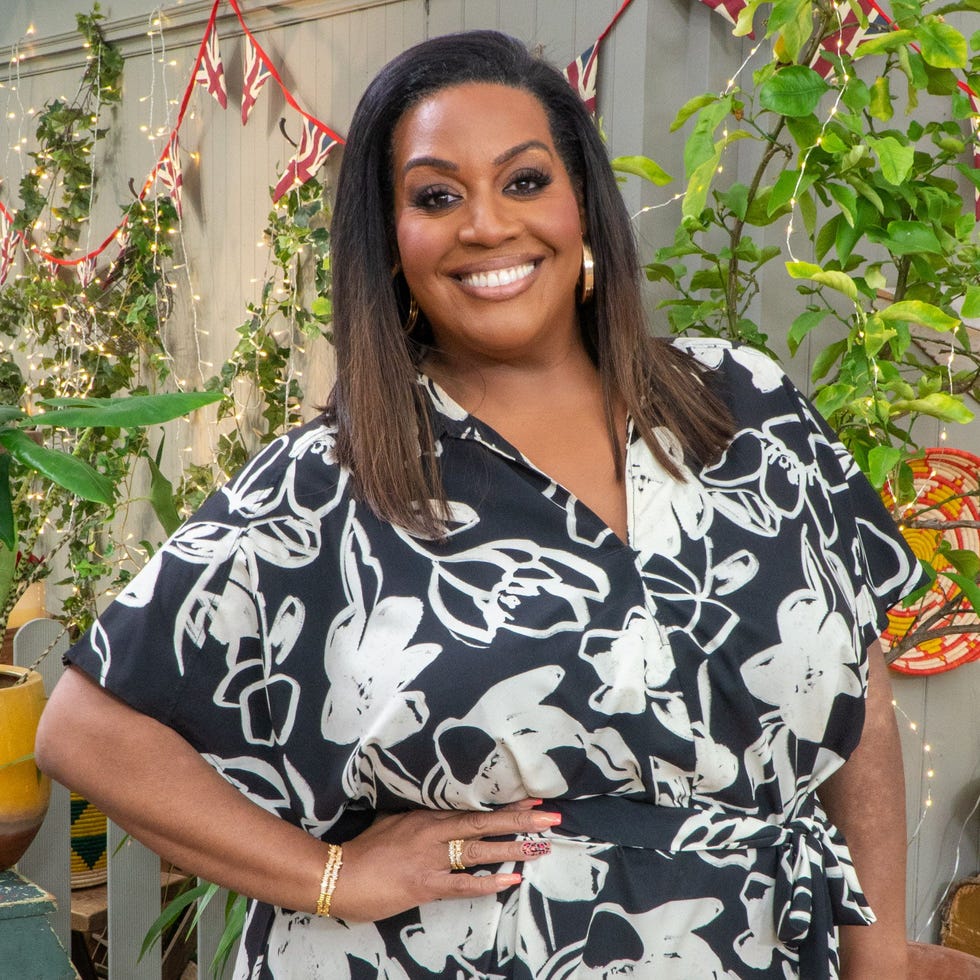
    Shop Alison Hammond's outfits

    Shop Alison Hammond’s outfits
    Credit: mark bourdillon

    Missing You book

    Orion Publishing Missing You book
    Credit: Orion

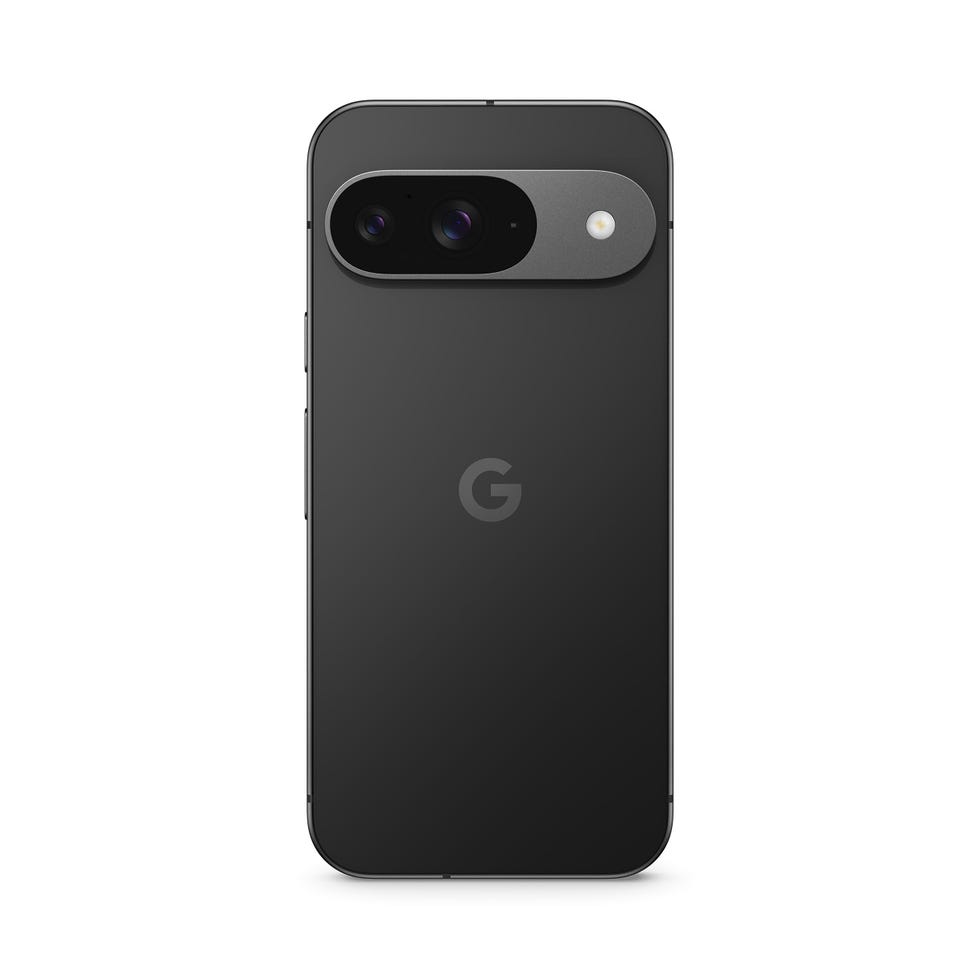
    Google Pixel 9 (128GB, SIM-free in Obsidian)

    Google Pixel 9 (128GB, SIM-free in Obsidian)
    Credit: Google

    Apple TV+ 7-day free trial

    Apple TV+ 7-day free trial
    Credit: Apple TV+

    Best Seller

    Shop Cat Deeley's This Morning outfits

    Shop Cat Deeley’s This Morning outfits

    Sign up for Disney+

    Sign up for Disney+
    Credit: Chuck Zlotnick

    The Street of Lies: An Official Coronation Street Interactive Novel

    The Street of Lies: An Official Coronation Street Interactive Novel
    Credit: Octopus Books

    Death in Paradise: The Puzzle Book

    Death in Paradise: The Puzzle Book
    Credit: BBC Books

    [ad_2]

    Source link

  • Amid Sreeleela Dating Rumours, Kartik Aaryan’s Mother Asks For A “Good Doctor” As His Son’s Wife

    Amid Sreeleela Dating Rumours, Kartik Aaryan’s Mother Asks For A “Good Doctor” As His Son’s Wife

    [ad_1]


    New Delhi:

    Aside from his professional commitments, Kartik Aaryan remains in the news for his love life. Going by the latest buzz, the Bhool Bhulaiyaa 2 actor is currently romantically involved with Southern actress Sreeleela.   

    Adding fuel to rumour mills, Kartik’s mother Mala Tiwari said something during the recently held IIFA Awards 2025 that raised a lot of eyebrows.

    A clip that has gone viral over the internet featured Kartik’s mother being asked about her future daughter-in-law’s expectations. Reacting to this, Mala Tiwari revealed that she wants a good doctor as her son’s wife.

    Kartik’s mother stated in the video, “The family’s demand is a very good doctor”. Netizens are taking her statement as a hint towards her son’s speculated lady love.

    For those who do not know, Sreeleela is also studying to become a doctor.

    The latest statement by Kartik’s mother has fueled the speculations about Kartik and Sreeleela being in a relationship.

    Some time back, a video of Sreeleela having fun at Kartik’s family celebration went viral on social media. The clip showed her dancing with other guests during a house party.

    According to the reports, Kartik and his family hosted a celebration for his sister, Dr Kritika Tiwari as she achieved another milestone in her medical career.

    In the meantime, Kartik and Sreeleela have also been paired in a movie together. These two will be seen sharing the screen in director Anurag Basu’s next. This yet-to-be-titled drama will be produced by Bhushan Kumar under the T-Series banner. While the name of the film has still not been announced, it is believed that the project could be an addition to the popular Aashiqui franchise, Aashiqui 3. An official confirmation is still awaited.

    The recently shared teaser clip showed Kartik singing Tu Meri Zindagi on stage. He sported a heavy beard and rugged long hair.

    (Except for the headline, this story has not been edited by NDTV staff and is published from a syndicated feed.)


    [ad_2]

    Source link

  • Labour’s war on parents – spiked

    Labour’s war on parents – spiked

    [ad_1]

    Labour’s contempt for parents becomes clearer by the day. Listen to its MPs and you get the impression that mums and dads are either so incompetent they cannot get their kids to brush their teeth or so evil that only the law stands in the way of children being routinely beaten. This depressing diagnosis leads invariably to the same course of treatment: more state intervention into family life, which has the terrible side effect of undermining the authority of parents.

    Last week, the Labour government launched its flagship campaign to improve the dental hygiene of the nation’s children. Despite the near-impossibility of finding an NHS dentist in many parts of the UK, this campaign did not involve stumping up for more dentists. Instead, hundreds of thousands of children will be given supervised toothbrushing lessons at nursery or school.

    In what could easily be confused with an advertisement for toothpaste manufacturer Colgate, which sponsors the government’s campaign, UK health secretary Wes Streeting promised to ‘get England smiling again’. Thanks, Wes! But let’s not forget that getting children smiling was, until two minutes ago, the responsibility of parents, not government ministers.

    The initial focus of the toothbrushing drive is on ‘deprived areas’ where, apparently, ‘a third of five-year-olds… have experience of tooth decay’. Much has been made of the fact that tooth decay is now the ‘leading reason’ children are admitted to hospital. Given the difficulty in seeing a dentist, this is perhaps unsurprising. And in light of far more serious reasons why children might need to go to hospital, the fact that such a comparatively trivial matter as tooth decay tops the chart is actually good news. Something has to be the ‘leading reason’, after all. More importantly, as Christopher Snowdon has pointed out on spiked, rates of tooth decay in Britain’s children have not only fallen dramatically since the 1970s, but they are actually continuing to fall, too.

    So what problem is the government actually trying to solve with its Colgate partnership? The focus on ‘deprived areas’ is revealing. Let’s be blunt: it’s working-class parents who government ministers perceive to be deficient. The way they see it, the state has to step in and teach children how to brush their teeth because parents are supposedly not up to the job. This is a slap in the face to the millions of parents in ‘deprived areas’ who do manage to get their children to clean their teeth each day.

    Worse than just insulting, schemes like this only ever exacerbate the problems they try to solve. As I recently explored in a research paper for Civitas, teachers have been tasked with an increasing number of responsibilities that used to fall to parents. From supervising children brushing their teeth to checking the contents of packed lunchboxes, from monitoring how children get to and from school to safeguarding children’s mental health, every new responsibility given to teachers means less time for education. More seriously, the message this sends to parents is that they cannot be trusted to care for their own children and that child-rearing should be left to the professionals. Infantilised parents are reduced to following other people’s rules. Often this means that they struggle to enforce their own authority in the home.

    Worse still, some Labour MPs clearly assume that parents aren’t just incompetent but also wicked. With the Children’s Wellbeing and Schools Bill currently making its way through parliament, Labour MP Jess Asato has spied an opportunity to further her own pet cause. She has tabled an amendment, signed by 26 other Labour MPs, that would end the legal defence of ‘reasonable chastisement’ and effectively criminalise parents who use physical punishments such as smacking. Similar laws are already in effect in Scotland and Wales, which outlaw smacking even within the home.

    A smacking ban has long been pushed by campaigners and commentators who assume parents are too stupid to know the difference between smacking and beating. But there is no evidence to suggest this is the case. Despite what many campaigners say, appalling examples of child abuse and even murder, such as the killing of Sara Sharif, would not have been prevented by new anti-smacking laws.

    Smacking might not be the parenting experts’ first choice for disciplining children. ‘Gentle’ parents steer clear of the old-fashioned word discipline altogether these days. But for a great many mothers and fathers, bringing a wayward child in line with a smack is a quick and effective way of regaining control of a potentially dangerous situation (or indeed an annoying situation).

    Posh parents with all the time in the world to spare can appear saintly by issuing sermons and sending children to the naughty step as a punishment. For stressed-out mums and dads trying to get a toddler fed and dressed, while also looking after a baby or before getting to work on time, smacking is a last resort. New laws won’t change this fact, they will just make parents feel guilty and ashamed. This will, yet again, undermine mums and dads in the eyes of their own children.

    Labour’s attacks on parents have not come out of the blue. They come at a time when everyone, from the Princess of Wales to Instagram influencers, from neuroscientists to celebrities, insists on telling parents how they should raise their children.

    Mothers and fathers deserve a break. The most helpful thing the government could do is to leave parents alone.

    Joanna Williams is a spiked columnist and author of How Woke Won. She is a visiting fellow at Mathias Corvinus Collegium in Hungary.

    [ad_2]

    Source link